 RIDE & RACE
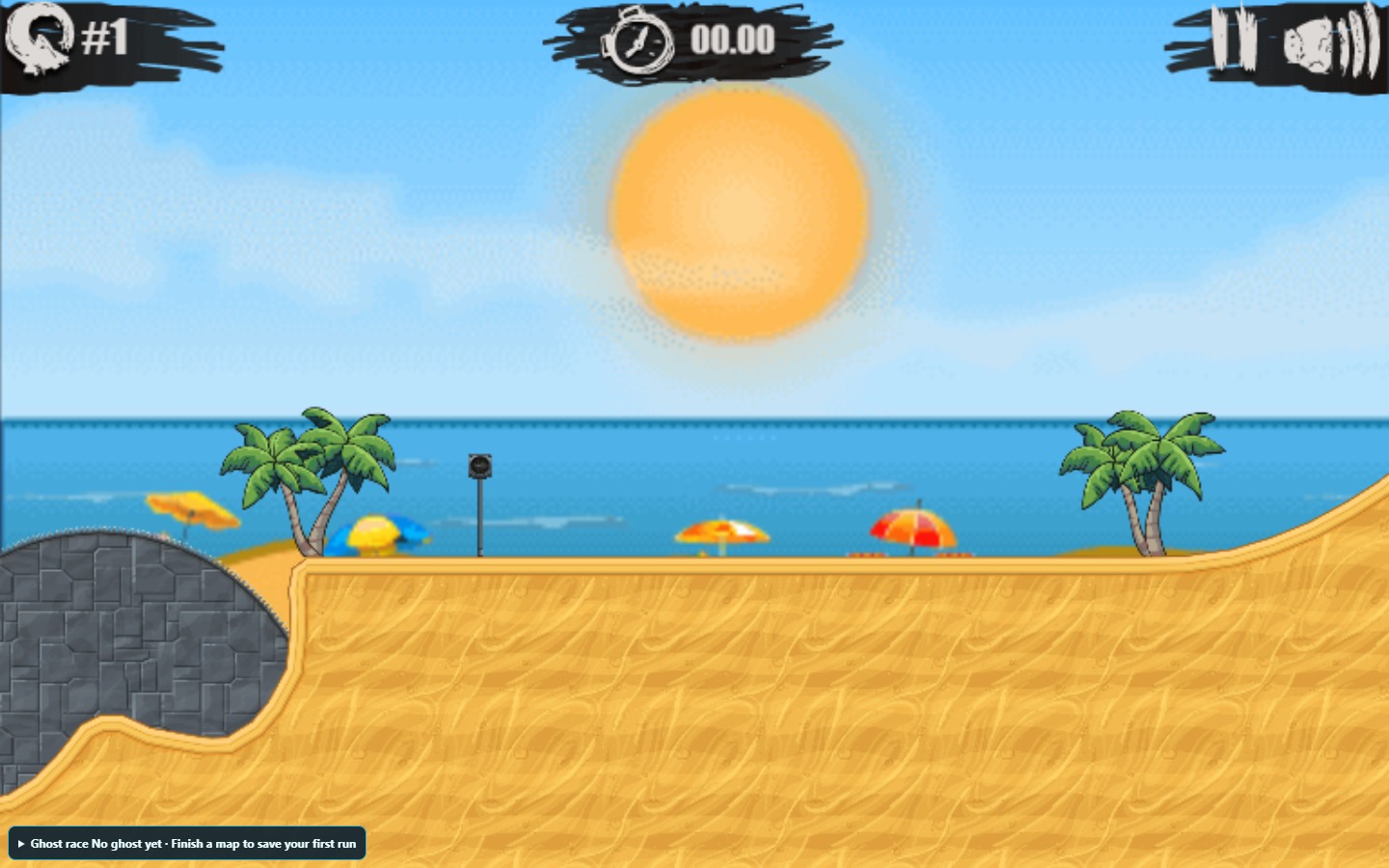
Use the beach start to establish a steady bike
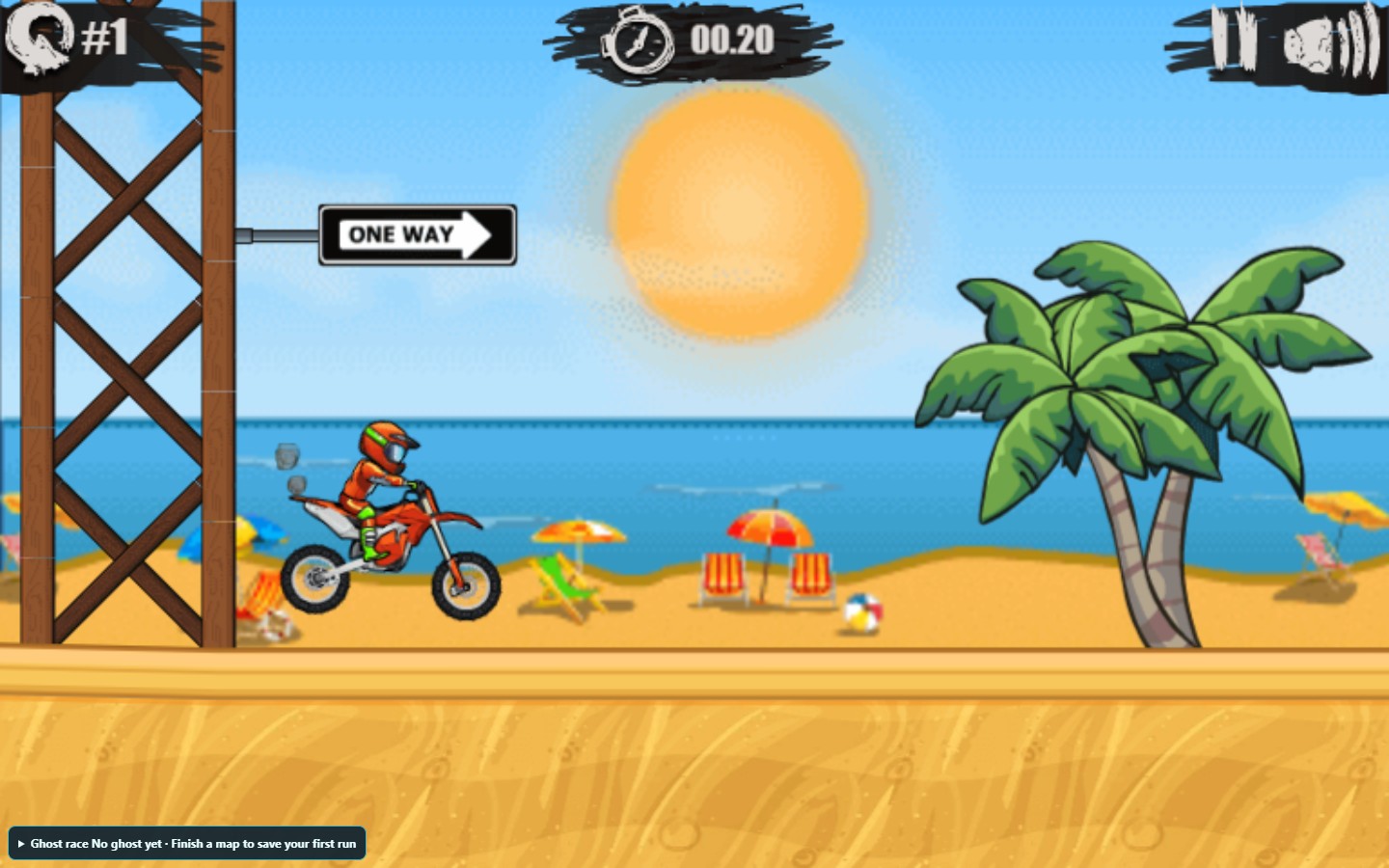
The opening straight is a place to learn the controls before the track changes height. Press the throttle and observe the frame and wheels as the bike moves. A brief lean correction is enough to feel the difference between accelerating and rotating. Avoid beginning with an extended wheelie, because it hides the contact and balance you are trying to understand.
The forward sign establishes direction, but the surface ahead determines your speed. Keep looking beyond the bike as the camera moves. A flat starting area does not mean the next screen is also flat, so ease off your inputs long enough to read the first incline rather than carrying an accidental rotation into it.
Treat the changes of height as a landing exercise
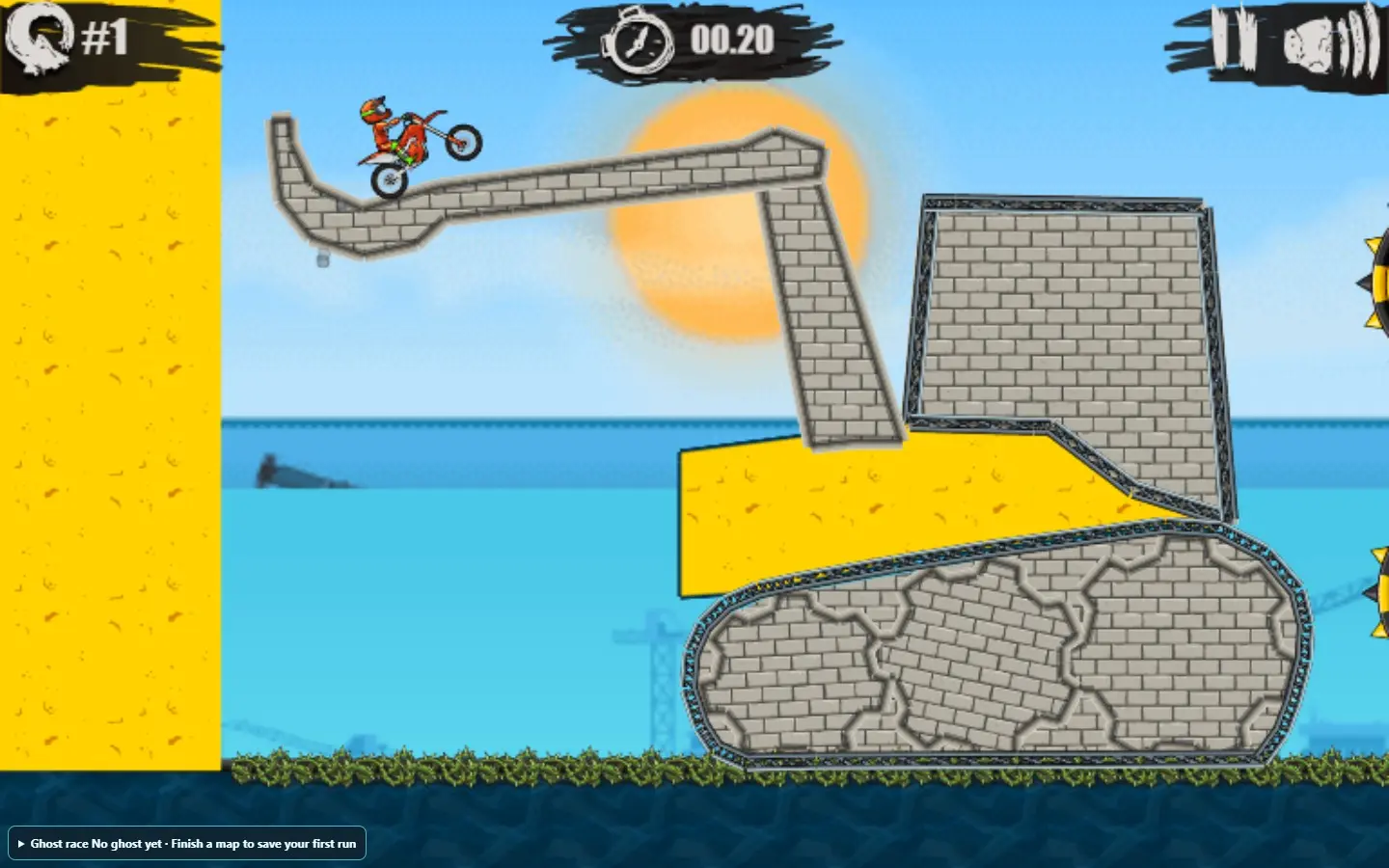
The raised sections make landing angle more useful than constant acceleration. Build enough speed for the approach, then use lean to match the bike to the next piece of track. Let a successful landing settle before adding another large correction. This keeps the rider above the wheels and leaves room to respond to the next slope.
A failed jump should tell you which part needs adjustment. Falling short suggests an approach-speed problem; reaching the surface with the rider pointing into it suggests an angle problem. Change that one part on your next attempt. Increasing speed and rotation together makes it harder to tell why the result changed.
 VIEW FULL SIZE +
 VIEW FULL SIZE +
Reach the checkpoint before experimenting
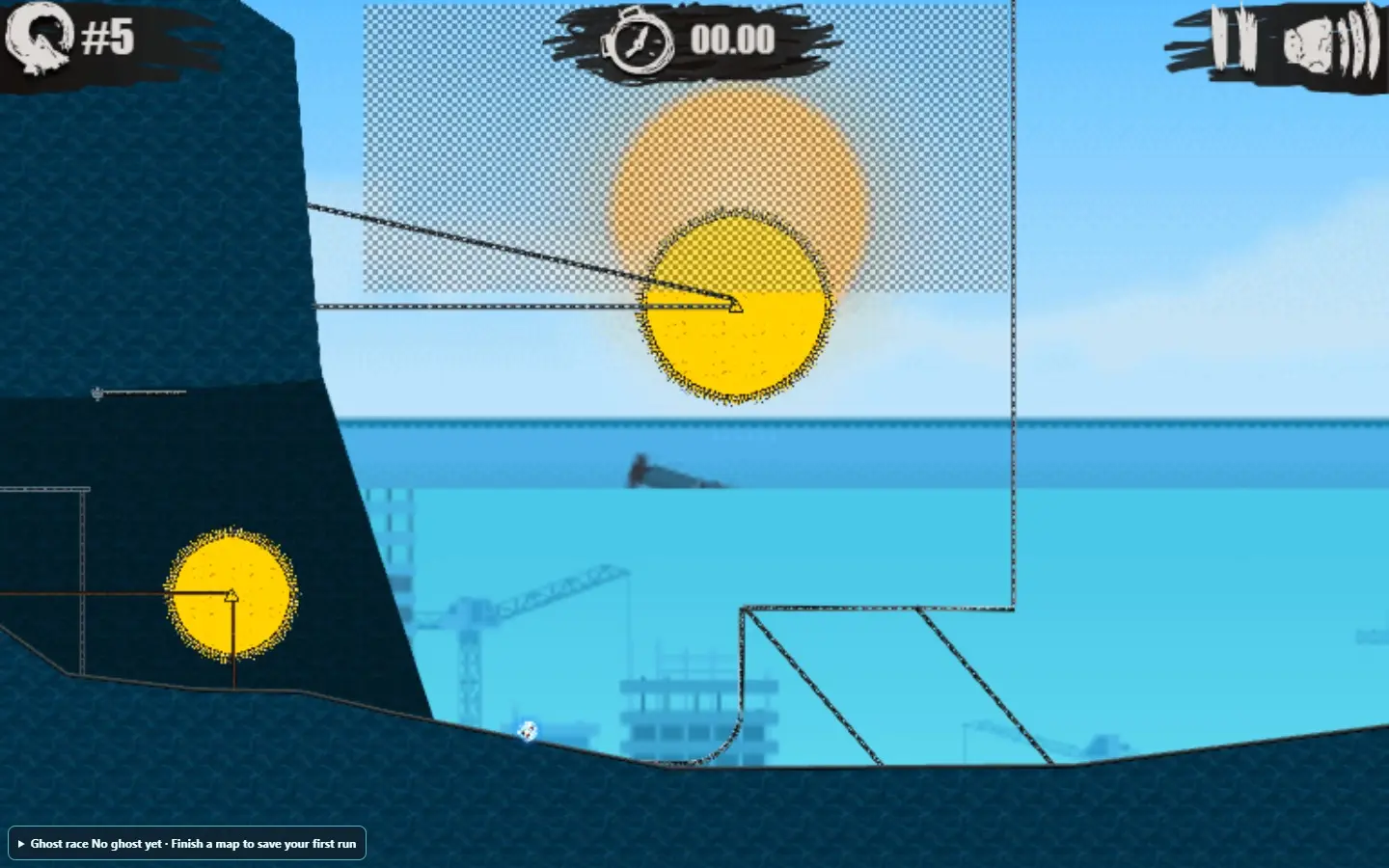
Classic 1 has one checkpoint, so reaching it divides the learning task into two parts. Look for the in-game marker and make a stable crossing before trying a riskier movement later in the level. A crash after a saved checkpoint can be retried with Space, whereas R starts the complete level again.
The checkpoint is a practice tool rather than a replacement for reading the road. After respawning, look at the next platform and rebuild your approach deliberately. The useful habit is to recognise the section you are entering and choose a speed for it, not to repeat the same key hold regardless of where the bike returns.
Evidence: Classic 1 level data · Controls, retries and pause
Use a clean finish as the basis for faster runs
The finish confirms the complete run; the star result then tells you how quickly you completed it. Classic 1’s three-star threshold is 13 seconds, with two stars through 20 seconds and one through 28 seconds. These are the game’s result times, not a promise that a beginner should finish within those limits immediately.
The simplest time improvement is to remove a mistake you can already identify. Replace an unnecessary stop with a steady approach, or turn a rough landing into one that lets you accelerate sooner. Once that works repeatedly, compare another part of the course. A chain of controlled sections is more dependable than one spectacular jump followed by a crash.
Evidence: Classic 1 level data · Star result calculation
ABOUT THIS GUIDE
Sources & verification
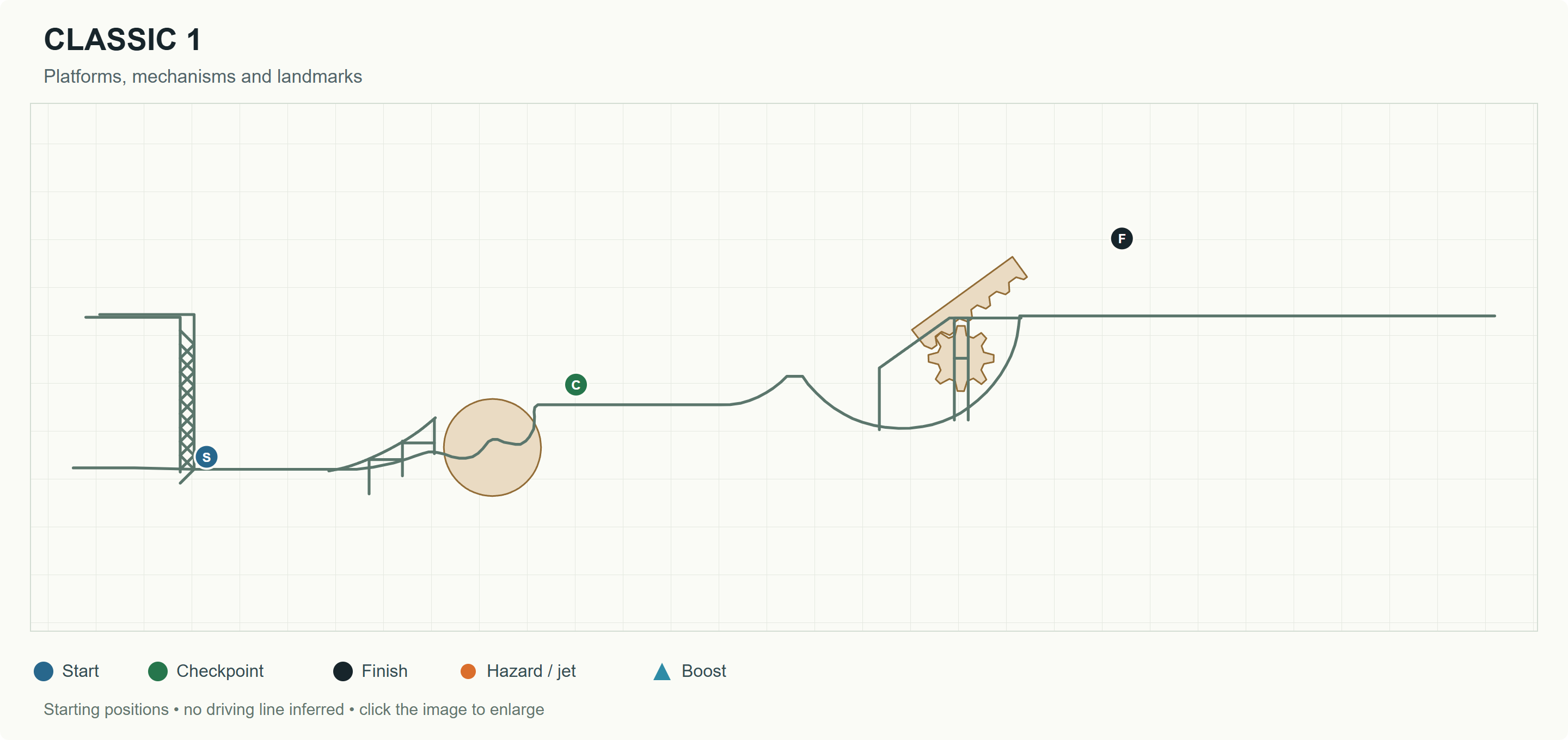
The checkpoint count, result thresholds and layout were checked against Classic 1 data. The checkpoint image is a camera inspection of the real scene.
What the gameplay evidence covers
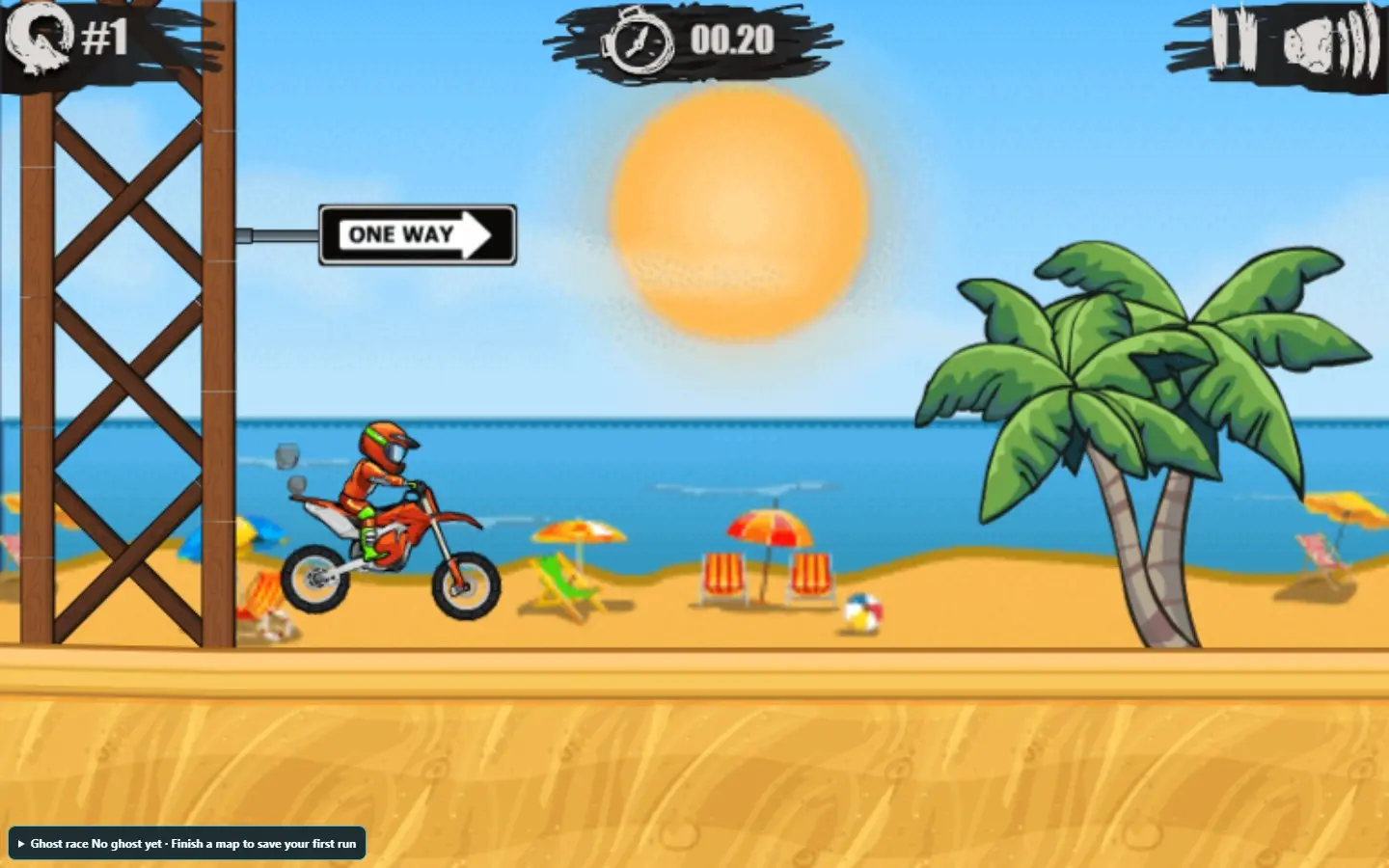
The introduction image shows a short approach from the start. No full-course keyboard completion was recorded for this guide.
Layouts show initial geometry. Suggested riding approaches are not certified input sequences. No named human reviewer is currently credited.
- Classic 1 level data1 checkpoint; 3 / 2 / 1 star thresholds: 13 / 20 / 28 seconds.
- Controls, retries and pauseThe input controller defines arrows and WASD; Gameplay defines restart, crash retry and pause handlers.
- Star result calculationpostRace compares the game timer with every map prize threshold using an at-or-below comparison.
- Introduction screenshot recordDates, scene IDs and image hashes for the original six game images.
- Level-detail screenshot recordCapture methods, map IDs, image hashes and the isolated Alter 3 gate check.
- Map facts and diagram provenanceLayout source hashes and the coordinate method. Diagrams show initial geometry, not a played route.
First published · Updated
Latest revision: Added explicit sources, per-guide verification coverage, AI preparation disclosure and correction instructions. Clarified the distinction between screenshots, mechanism inspection and completed playthroughs.