 RIDE & RACE
Keep the raised opening under control
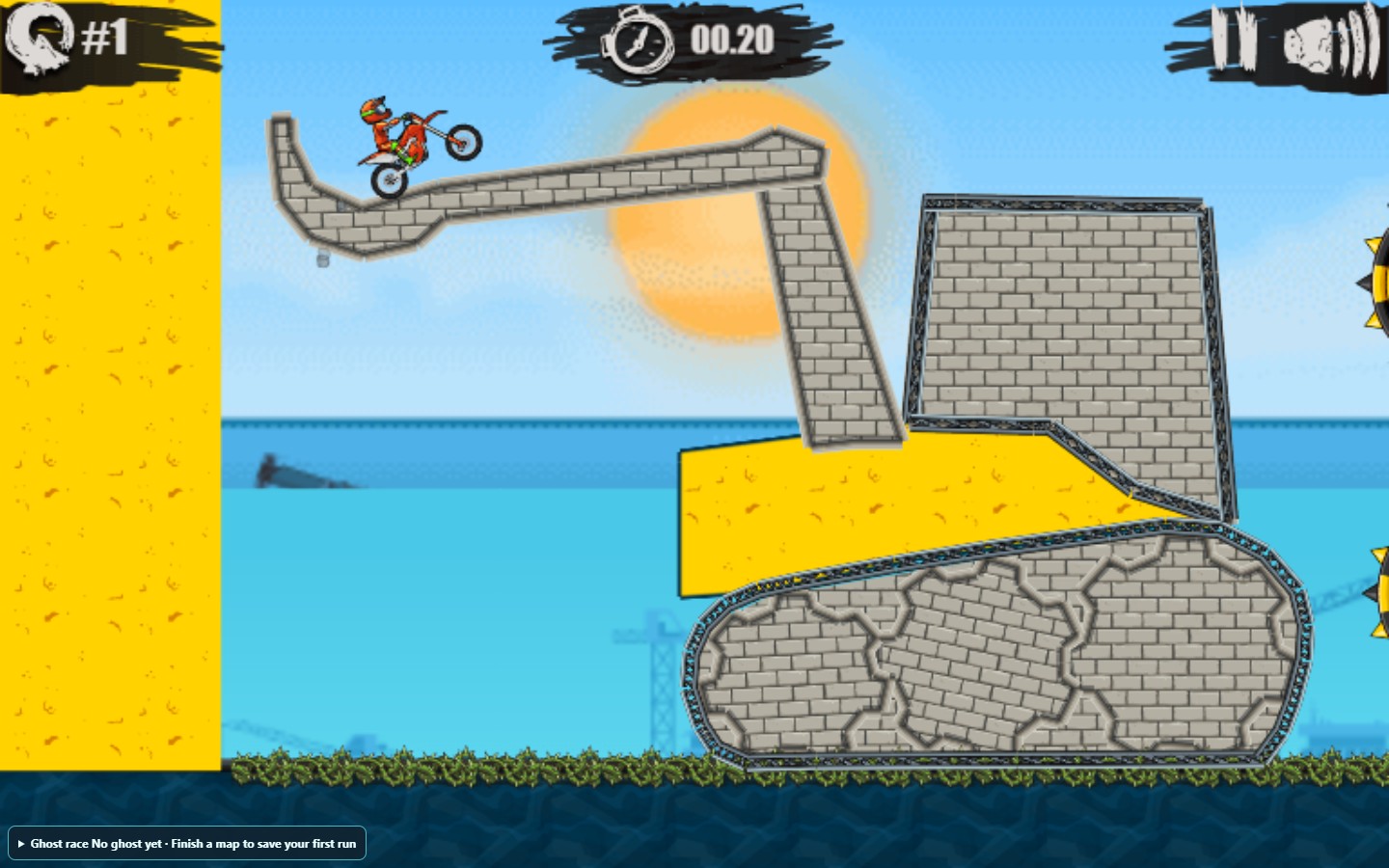
The opening is an elevated mechanism, so a low-looking surface is not automatically the intended continuation. Begin with enough speed to move cleanly, then watch how the platform changes as you approach its end. The large construction shapes underneath help you read the scene, but you still need to identify the road the wheels can actually follow.
Your next landing matters more than keeping the throttle pressed at every moment. Settle the bike before leaving the raised section and look for the next supported surface. If a jump produces an uncontrolled drop, revisit the take-off point and angle rather than assuming the lower background is a shortcut.
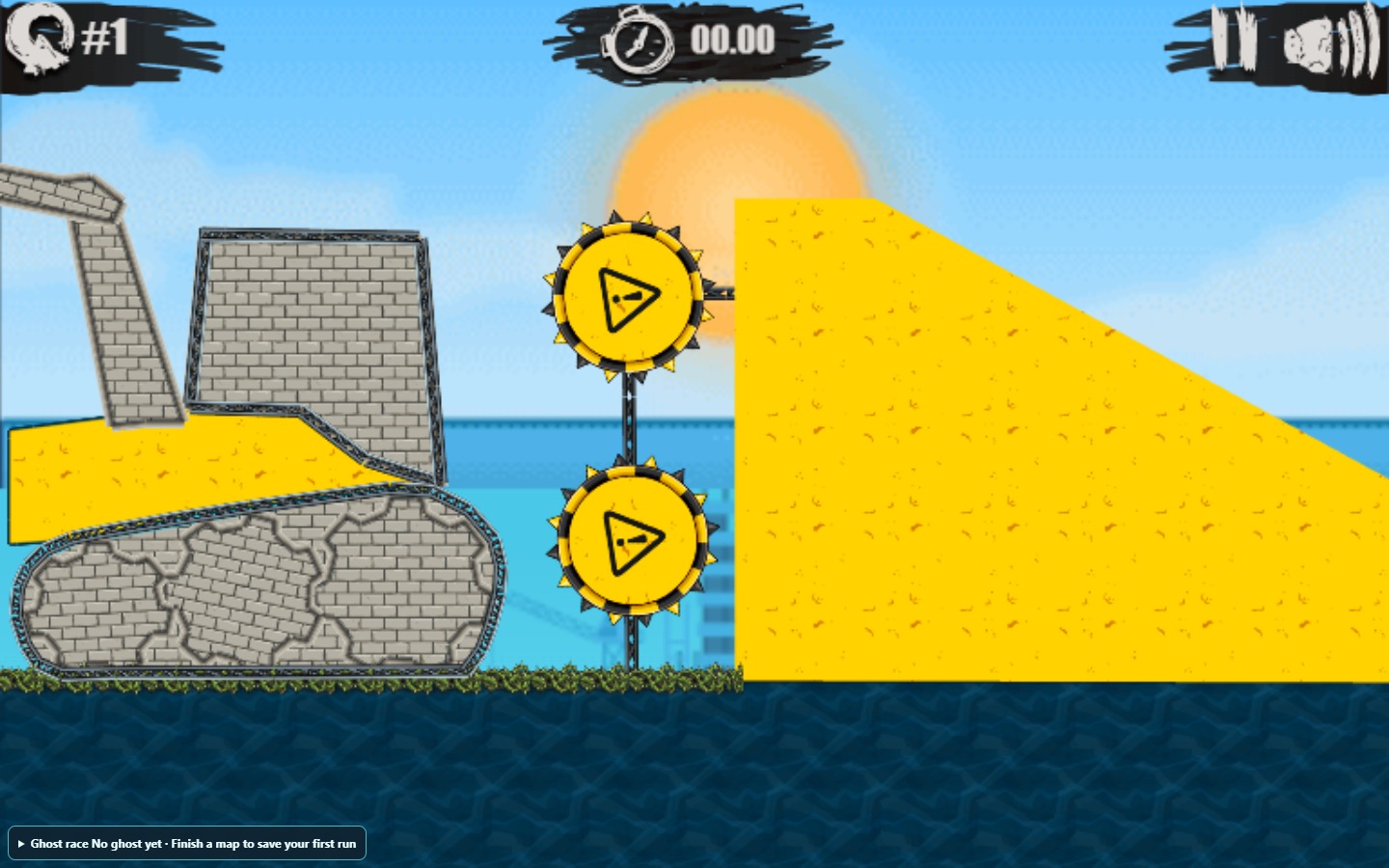
Read the first spike wheels as a moving passage
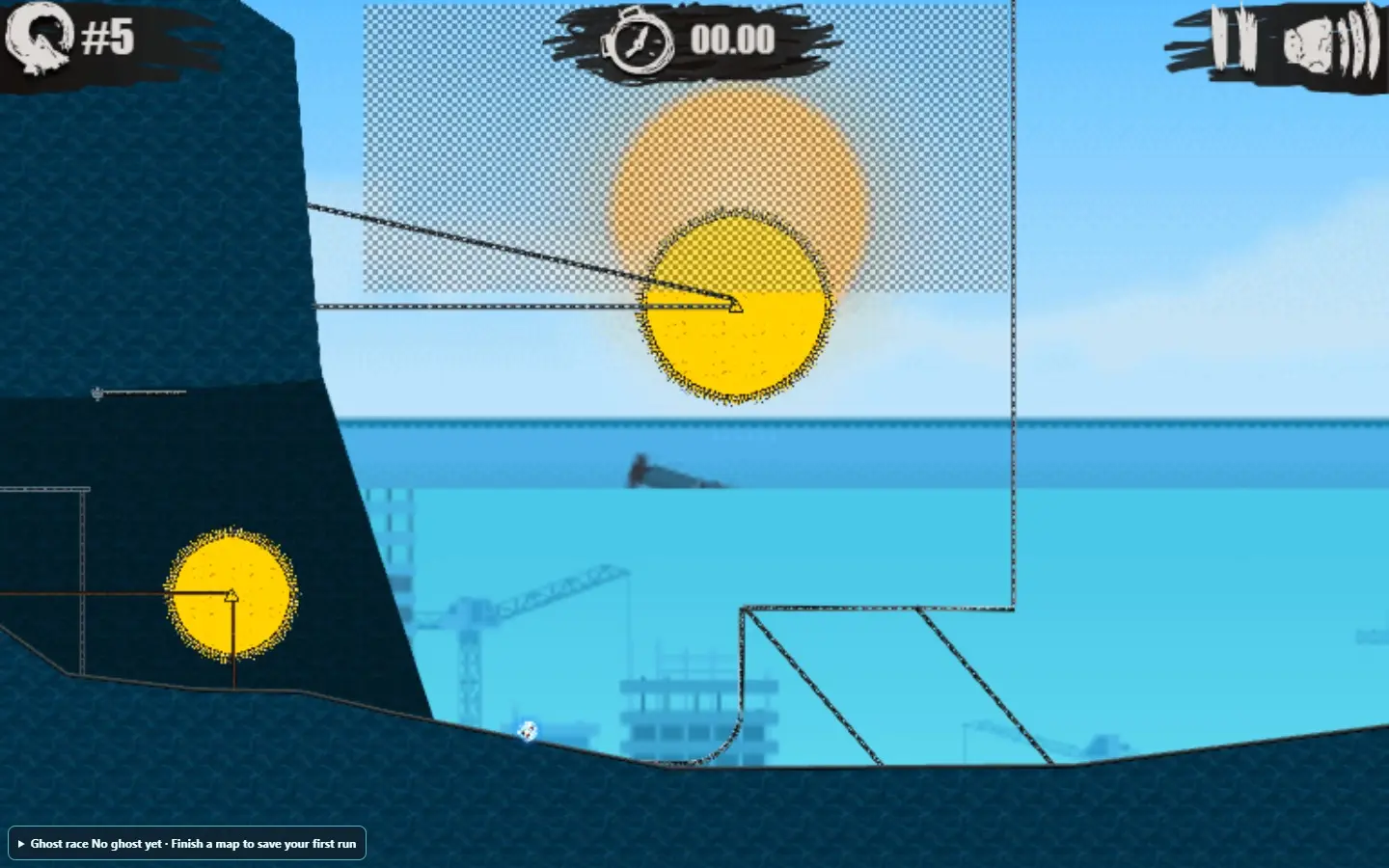
The first large spike wheels occupy different heights, making the usable passage a matter of position and timing. Watch the teeth and the edge of the supporting road together. You need clearance for the rider as well as both wheels; a front wheel reaching open space does not make the entire crossing safe.
A short pause on supported ground can make the passage easier to understand. Observe the rotation, choose a moment when the available space is useful and commit with a settled bike. Braking at the last instant inside the hazard is less predictable than choosing the approach speed before entering it.
 VIEW FULL SIZE +
Use the checkpoints to separate the moving sections
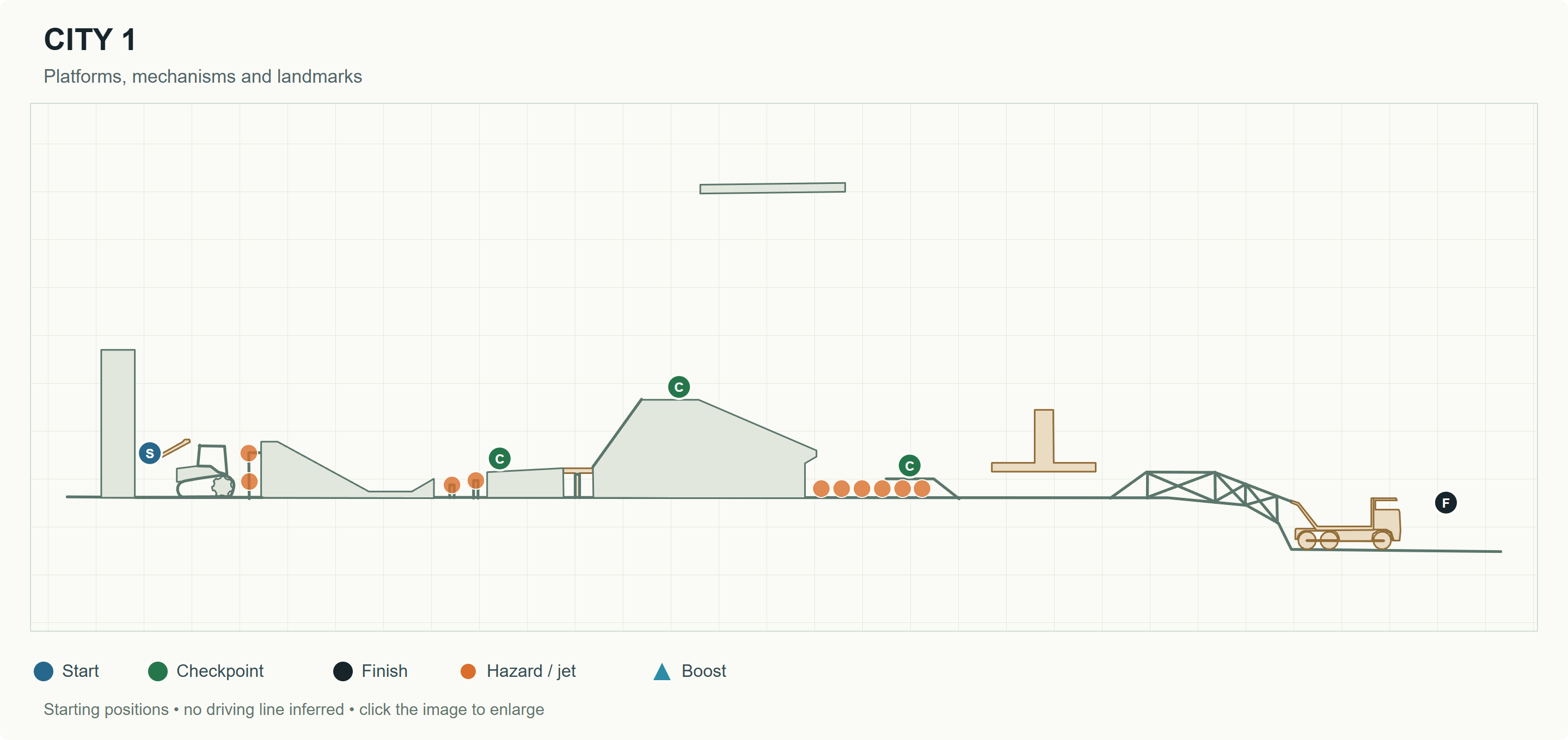
Three checkpoints divide City 1 into useful learning sections. They are located before and after substantial changes of height, so each saved position gives you a new approach to understand. Make sure the bike is settled after a retry before trying to recover the pace of a previous run.
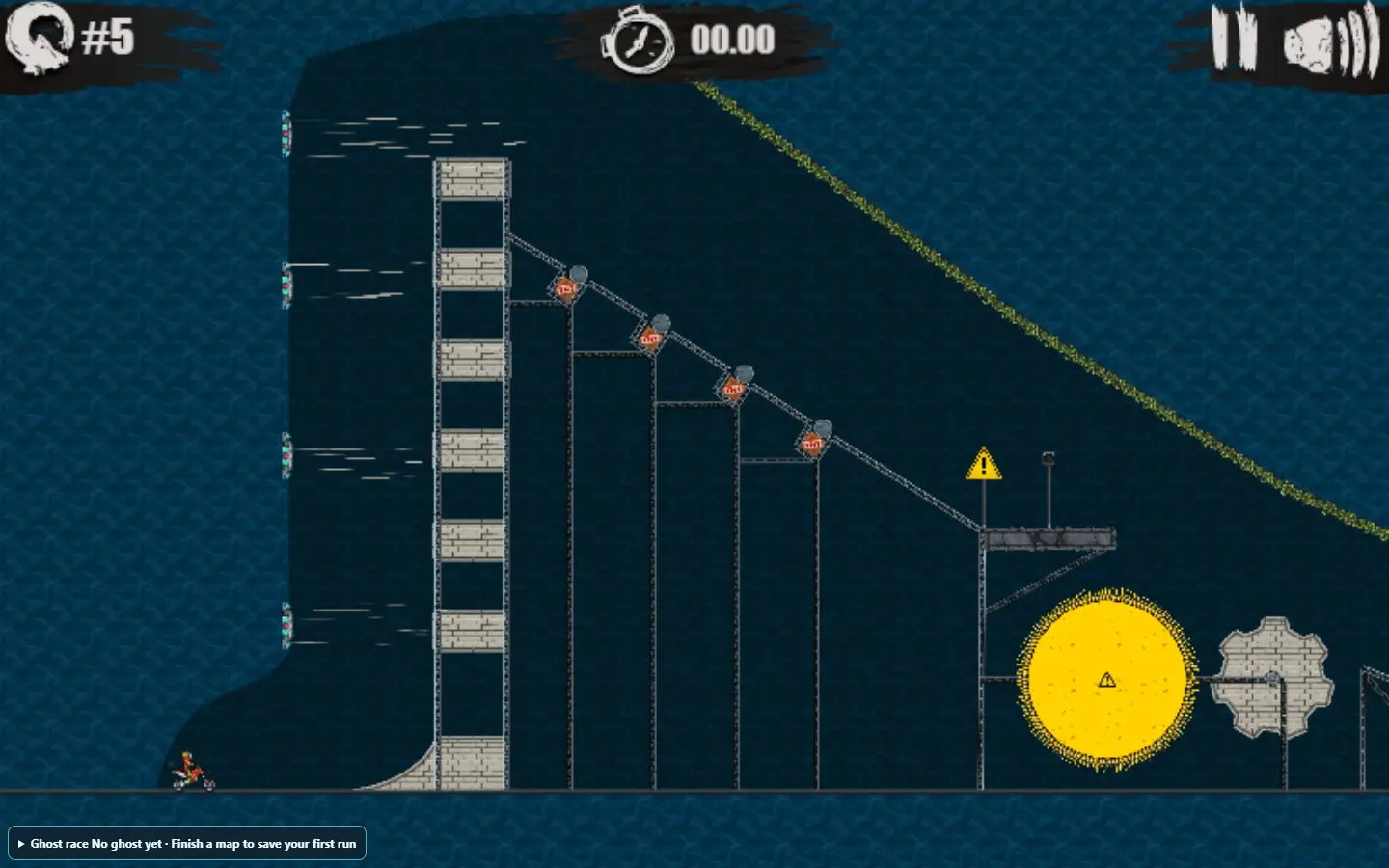
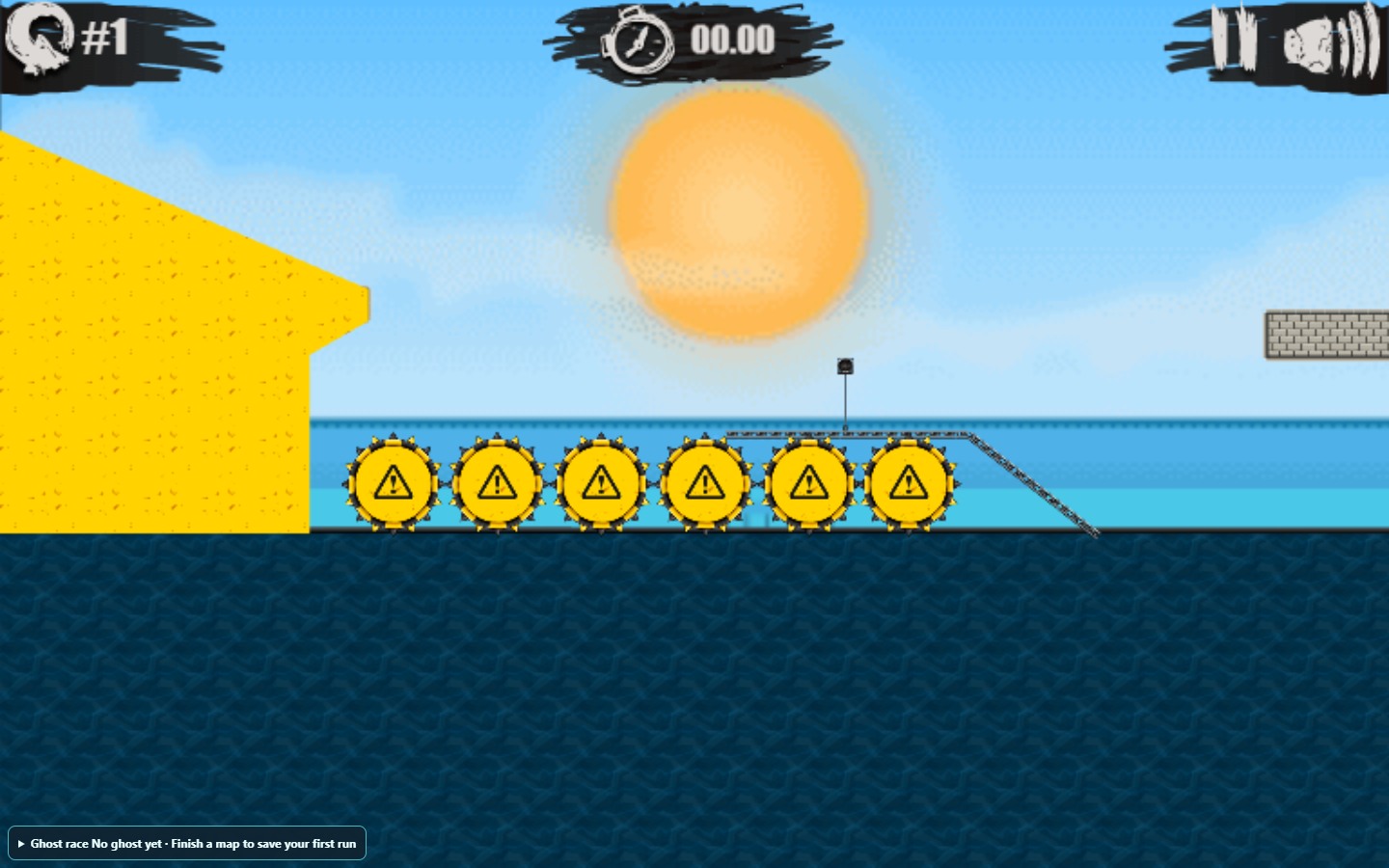
The long spike-wheel row asks for consistency over several hazards. The wheels belong to a triggered part of the course and should be read in their current state. Keep looking toward the next landing or moving support rather than fixing your attention on the tooth nearest the bike. A correction that saves one contact can still leave you poorly placed for the following wheel.
 VIEW FULL SIZE +
 VIEW FULL SIZE +
Evidence: City 1 level data · Level-detail screenshot record
Finish through the hinged section with a stable approach
The final hinged section continues the lesson about changing support. A bridge attached at pivots can move under the bike, so its visible angle is part of the approach. Match that angle with small lean inputs and keep enough control to follow the next surface instead of treating it as a fixed flat runway.
The completion screen is the reliable sign that the finish has registered. Continue through the finishing area instead of stopping just because the last large hazard is behind you. Once you can repeat the route, use the 22-, 30- and 36-second result thresholds to work toward three, two or one star respectively.
Evidence: City 1 level data · Star result calculation
ABOUT THIS GUIDE
Sources & verification
Map data establishes the three checkpoints and course objects. Close-ups inspect the actual saws and long wheel row at their initial positions.
What the gameplay evidence covers
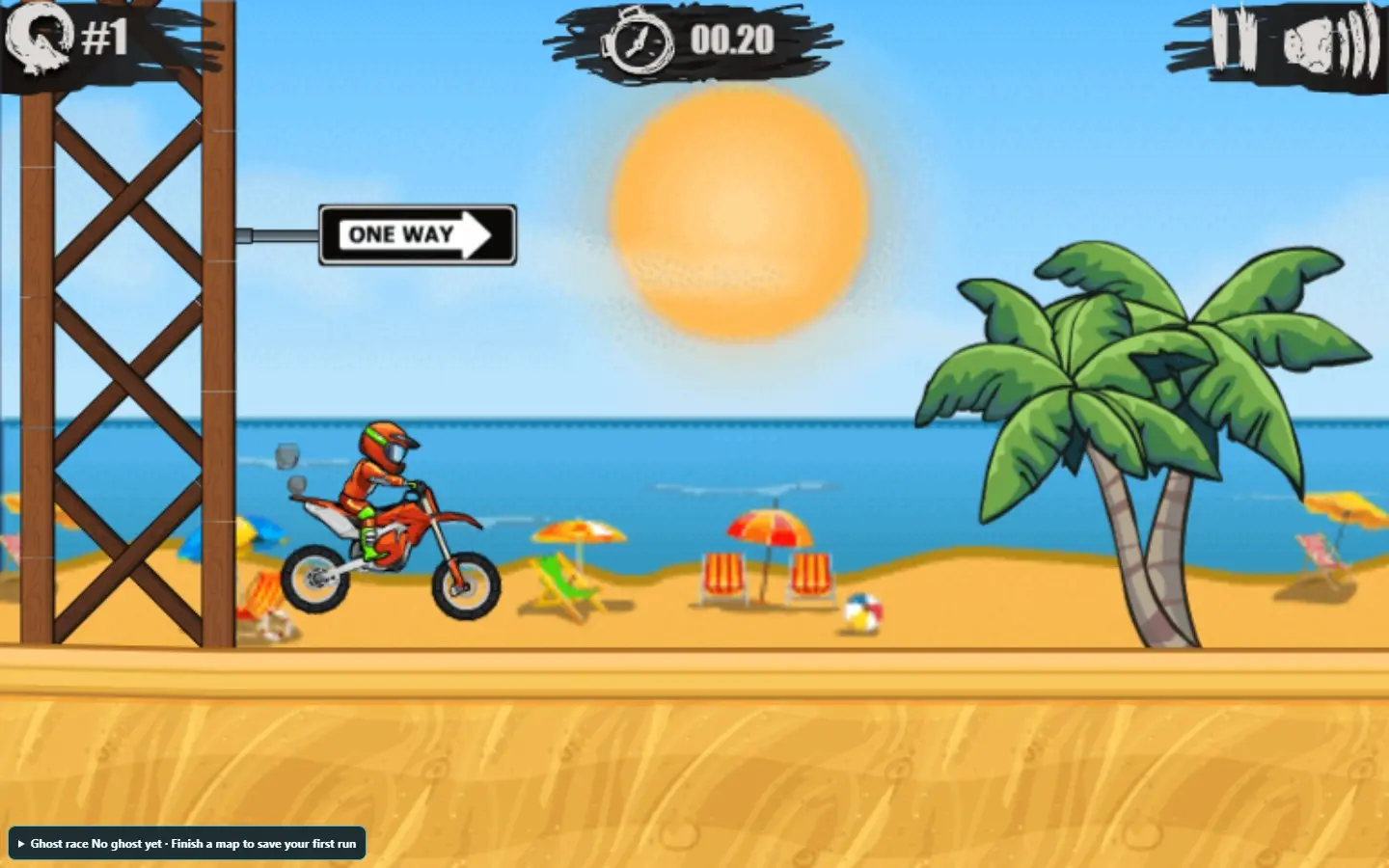
The opening screenshot includes a short keyboard-driven approach. The later camera views are not a completed player run.
Layouts show initial geometry. Suggested riding approaches are not certified input sequences. No named human reviewer is currently credited.
- City 1 level data3 checkpoints; 3 / 2 / 1 star thresholds: 22 / 30 / 36 seconds.
- Star result calculationpostRace compares the game timer with every map prize threshold using an at-or-below comparison.
- Introduction screenshot recordDates, scene IDs and image hashes for the original six game images.
- Level-detail screenshot recordCapture methods, map IDs, image hashes and the isolated Alter 3 gate check.
- Map facts and diagram provenanceLayout source hashes and the coordinate method. Diagrams show initial geometry, not a played route.
First published · Updated
Latest revision: Added explicit sources, per-guide verification coverage, AI preparation disclosure and correction instructions. Clarified the distinction between screenshots, mechanism inspection and completed playthroughs.