 RIDE & RACE
Watch the first vertical sequence before rushing it
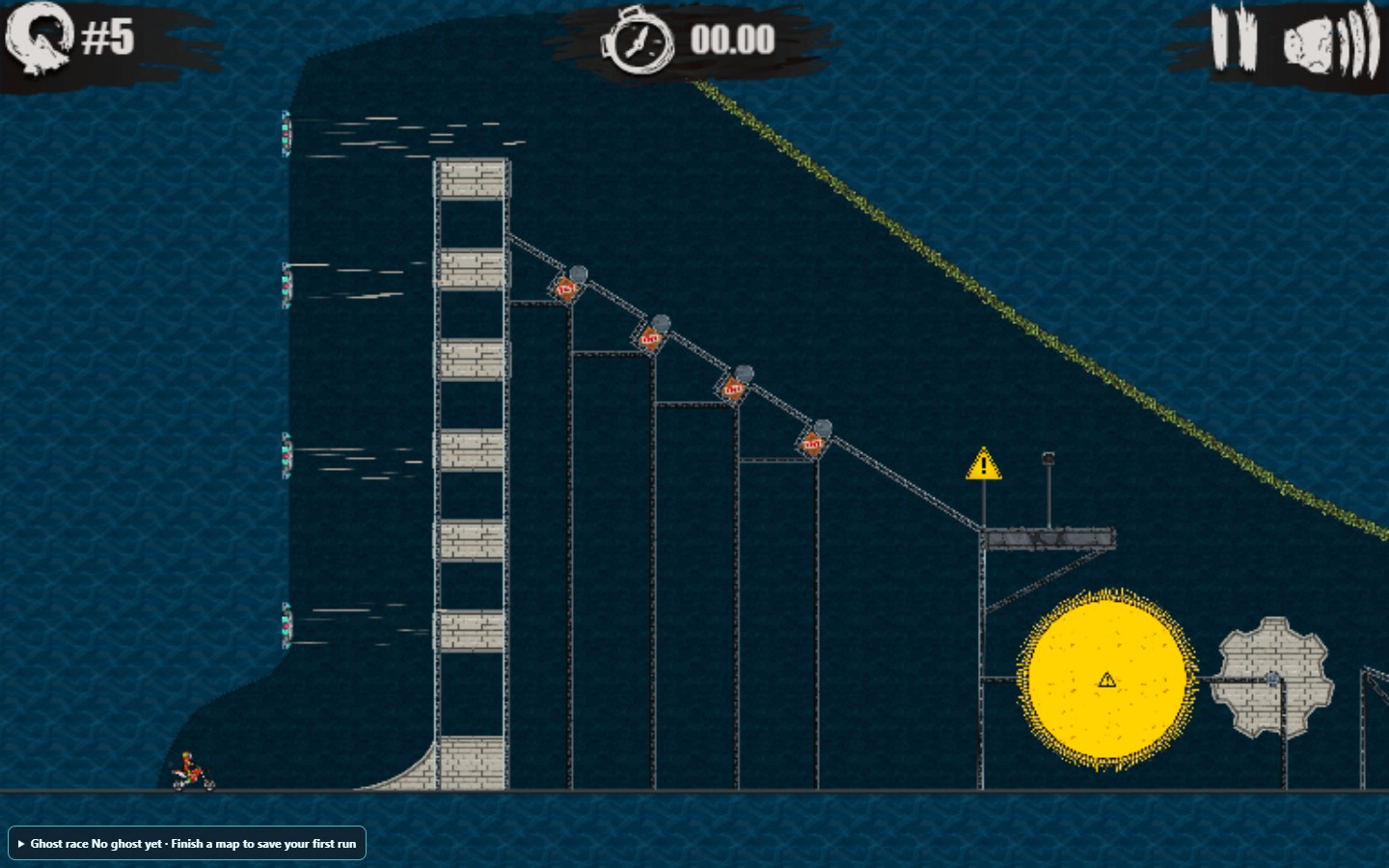
The opening connects air jets with moving and breakable objects, making the scene change even while the bike is waiting. Look at the surfaces the jets lead toward and let the machinery reveal an opening. You are planning a transfer to the next support, not merely crossing a flat stretch of road.
Waiting before the first driving input can help you understand the cycle. The game’s result timer begins with driving input, while mechanisms may already be moving. After you do begin, choose pauses for safety and position rather than assuming that a remembered delay will always put a moving object in the same place. A retry needs a fresh look at the scene.
Evidence: When the result timer starts · Level-detail screenshot record
Treat the two checkpoints as boundaries between mechanisms
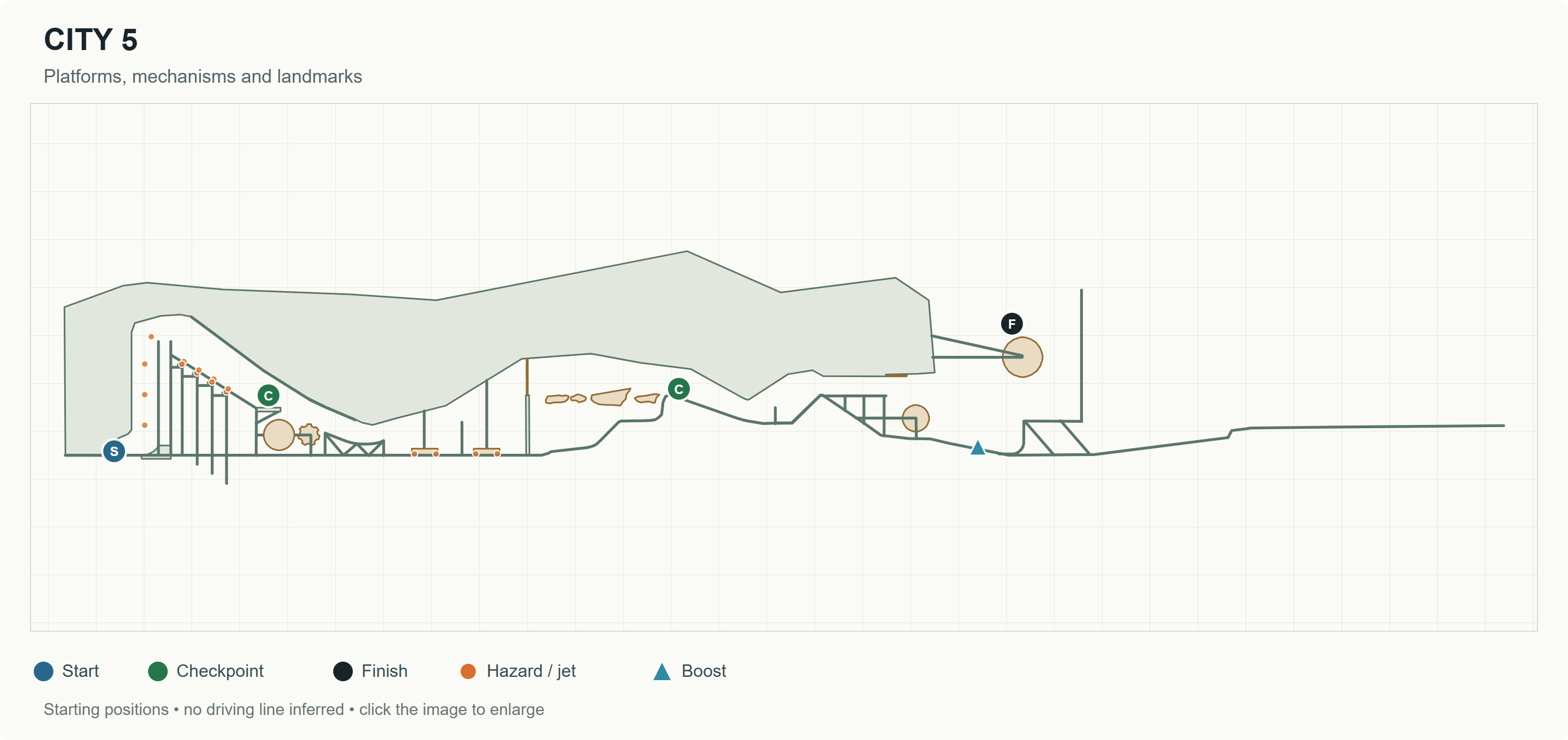
City 5 has two checkpoints, which makes a stable arrival at each one valuable. The first follows the opening height change and the second lies well into the course. Use the saved sections to learn how a gate, moving support or hinged bridge responds, instead of repeatedly trying to improvise the whole track at once.
Triggers can activate a mechanism before you are standing on it. After passing a switch area, watch the object ahead rather than trying to force it with the bike. If the road has not lined up yet, keep the wheels on the last safe support. Moving into the gap early gives up the very ground you need while waiting.
 VIEW FULL SIZE +
Evidence: City 5 level data
Keep the bike aligned across hinged supports
The middle course combines changing supports with objects that react to the run. Enter a hinged section with a moderate, readable angle and correct gradually as it moves. A clean exit onto stable road is more useful than gaining a small amount of speed while the bike is still pitching.
The next mechanism is a better target than the far edge of the screen. Look for a supported landing and the position from which you can see what happens next. This keeps your plan local enough to adapt when a platform or breakable object has moved since the previous attempt.
Prepare for the late boost and elevated finish
The late boost belongs to the final approach, so line up the bike before collecting it. The pickup gives a short period of added thrust rather than an instant completion. A poor take-off or wrong angle can still send that extra speed into the side of a structure.
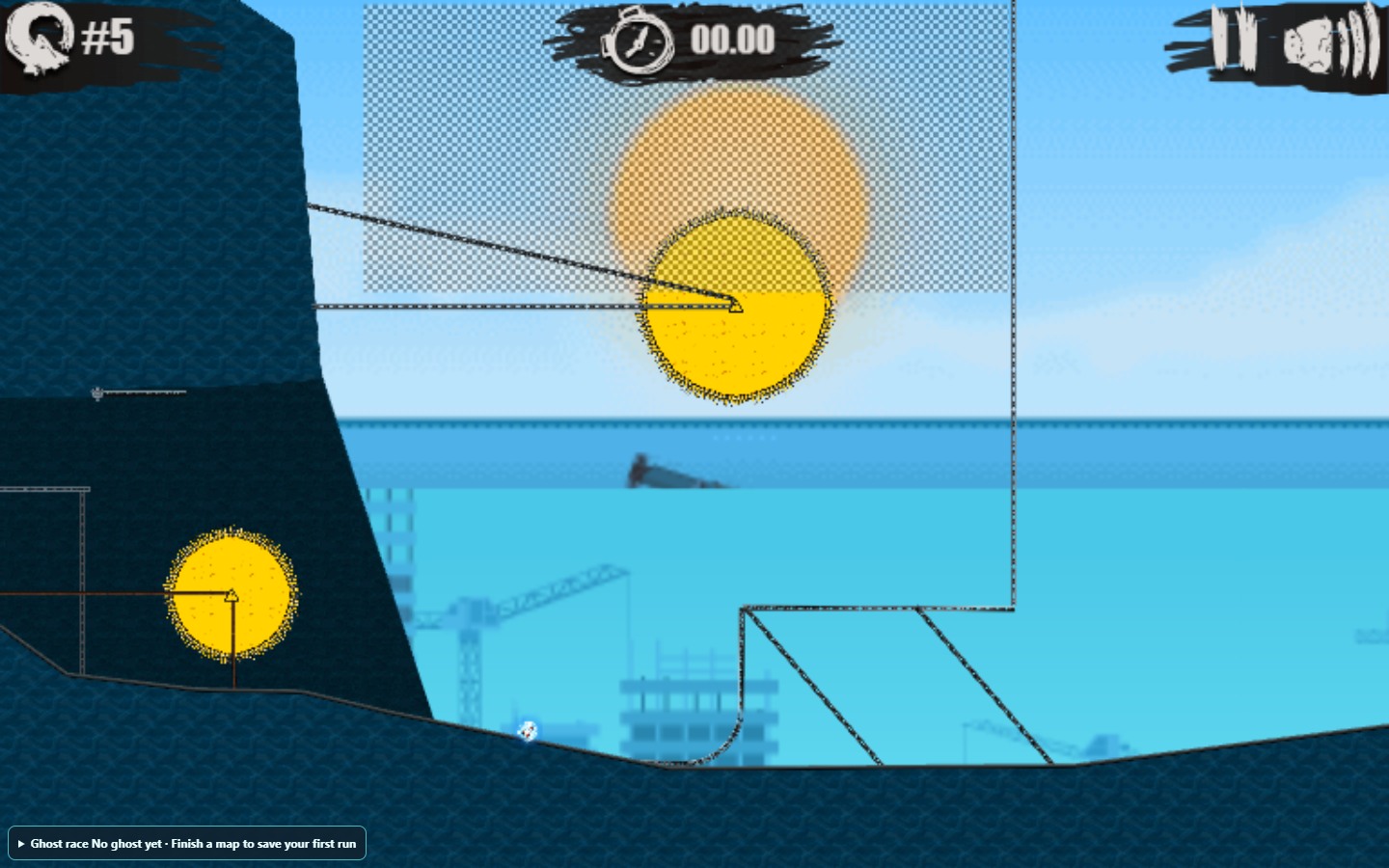
The large finishing wheel and its trigger are part of the level’s ending sequence. Continue through the mechanism as the route opens and follow the supported path toward the elevated finishing area. Reaching the vicinity of the wheel is not the same as registering completion; wait for the actual level-complete screen.
A repeatable ending is worth more than a fast opening followed by an uncertain final jump. Learn where the boost starts, where the wheel carries or redirects the route and where the bike should leave it. Once that sequence is reliable, the map’s 25-, 30- and 36-second star thresholds give you clear time goals.
 VIEW FULL SIZE +
Evidence: City 5 level data · Star result calculation
ABOUT THIS GUIDE
Sources & verification
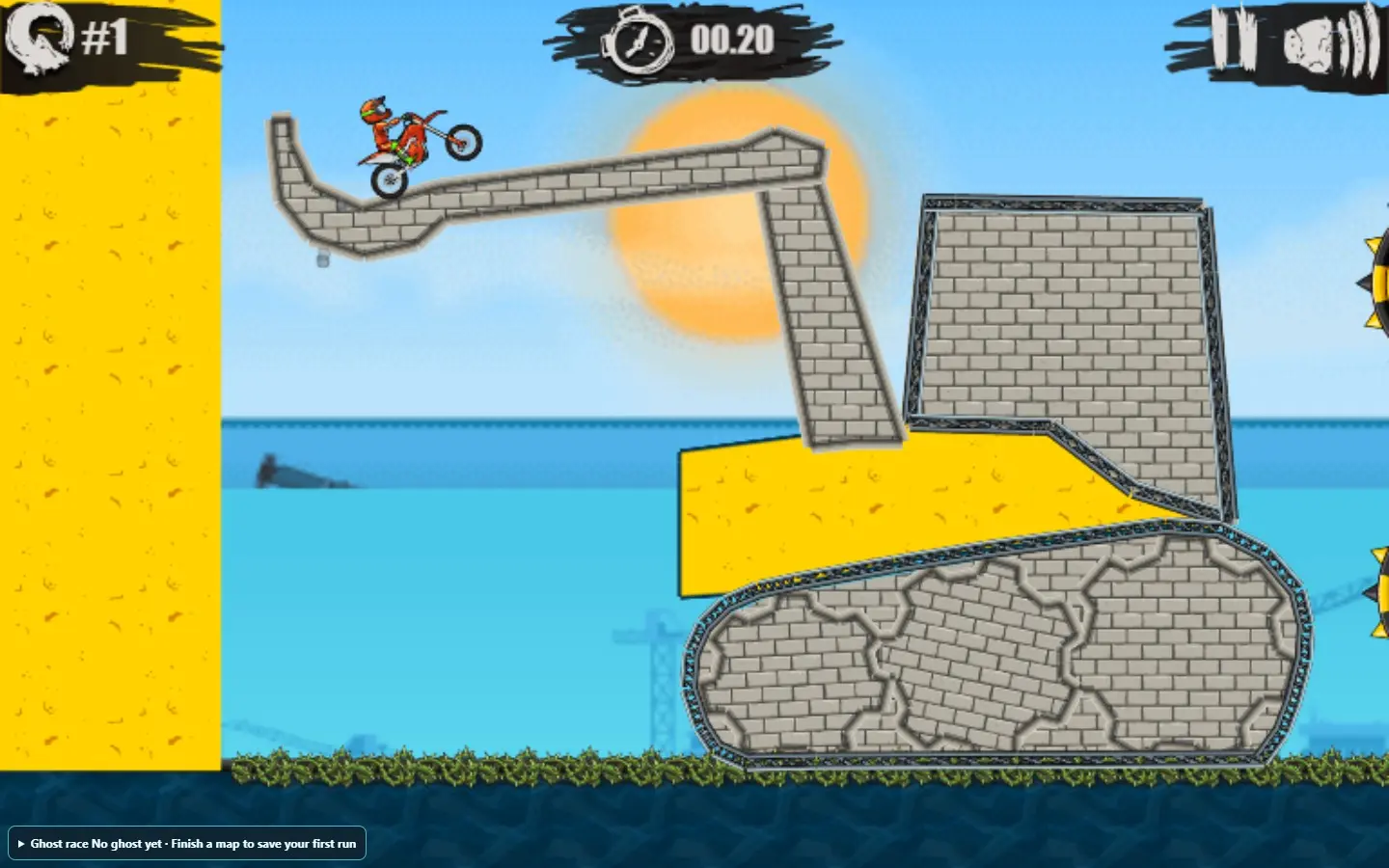
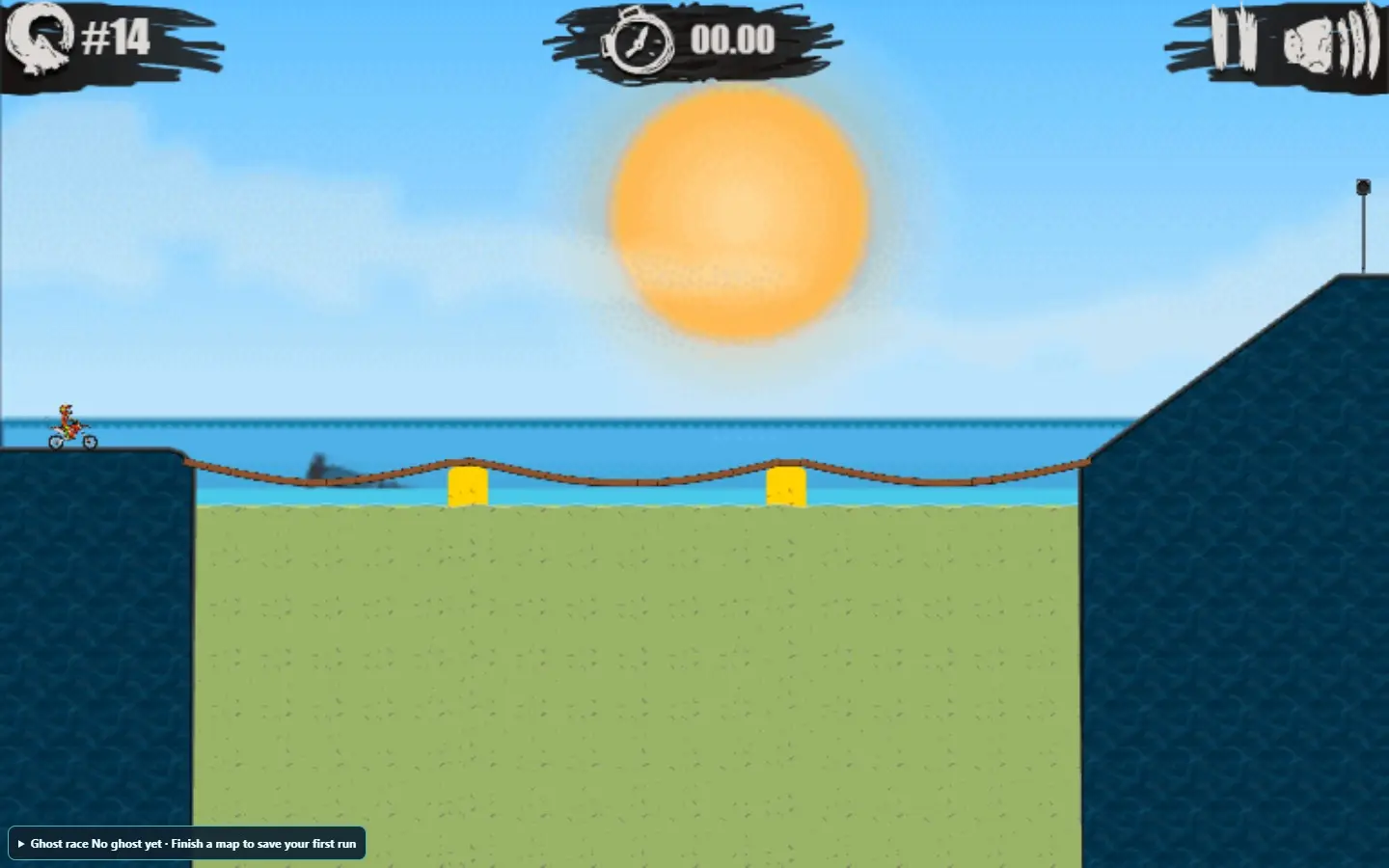
Map data and mechanism code support the two checkpoints, late boost and elevated finish. The opening and finishing images are detail camera views.
What the gameplay evidence covers
No complete keyboard traversal or timed completion was recorded for this guide. The finishing image documents geometry, not a successful finish.
Layouts show initial geometry. Suggested riding approaches are not certified input sequences. No named human reviewer is currently credited.
- City 5 level data2 checkpoints; 3 / 2 / 1 star thresholds: 25 / 30 / 36 seconds.
- Controls, retries and pauseThe input controller defines arrows and WASD; Gameplay defines restart, crash retry and pause handlers.
- Star result calculationpostRace compares the game timer with every map prize threshold using an at-or-below comparison.
- Level-detail screenshot recordCapture methods, map IDs, image hashes and the isolated Alter 3 gate check.
- Map facts and diagram provenanceLayout source hashes and the coordinate method. Diagrams show initial geometry, not a played route.
- When the result timer startsThe result timer advances when driving is active; it is separate from when the scene and mechanisms start.
First published · Updated
Latest revision: Added explicit sources, per-guide verification coverage, AI preparation disclosure and correction instructions. Clarified the distinction between screenshots, mechanism inspection and completed playthroughs.