 RIDE & RACE
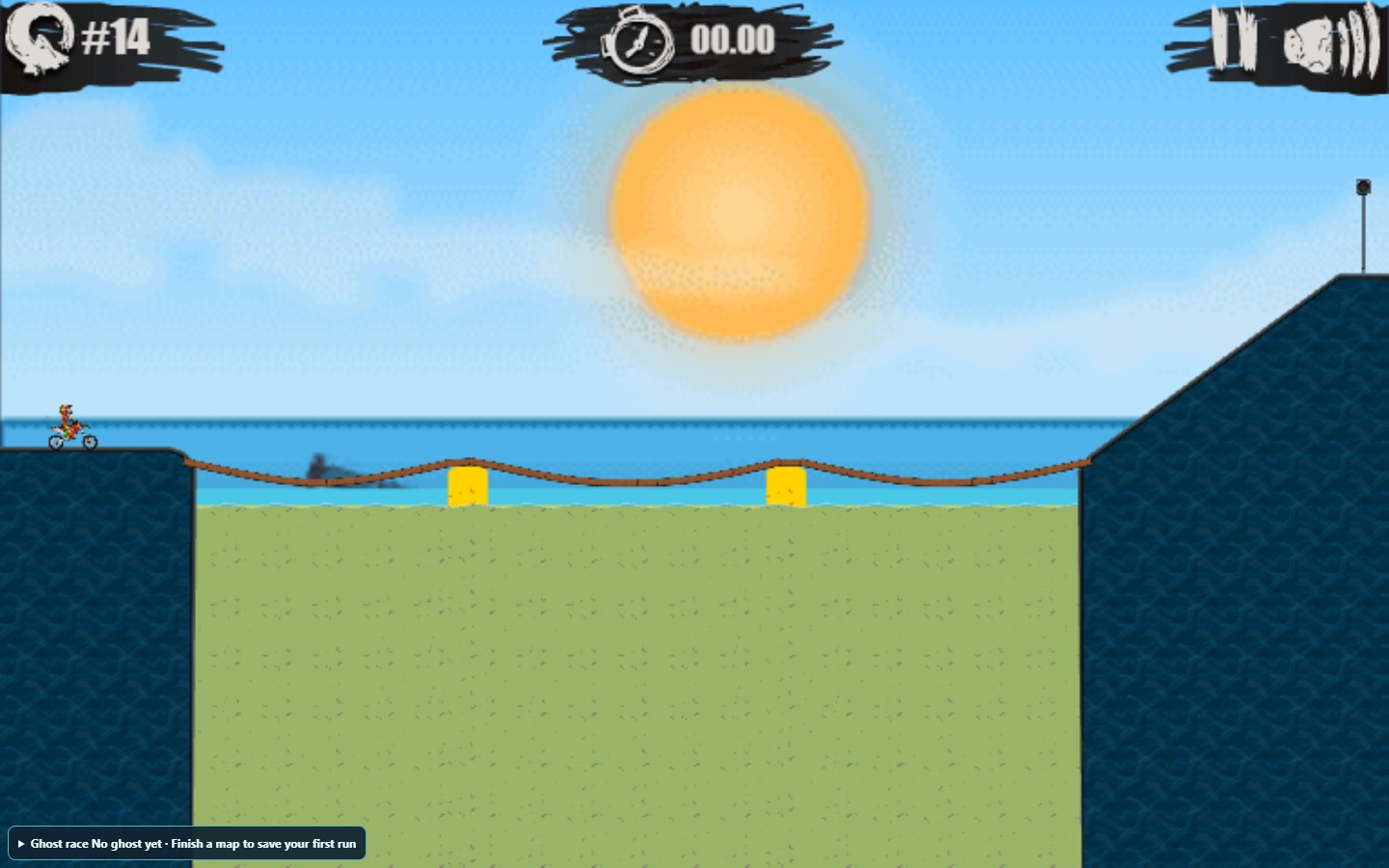
Cross the opening bridge with a settled bike
The opening bridge is a chain of hinged planks rather than one rigid road. Each section can respond as the bike crosses, so the slope under a wheel can change while you are still on it. Use enough throttle to maintain progress, but make lean corrections in response to the surface instead of trying to hold one dramatic angle.
The far end of the bridge is a landing problem as well as a crossing problem. Look at the road beyond the final planks and avoid leaving the bridge with excessive rotation. A steady exit gives you a better start on the climb than a fast crossing that ends with the rider tipped toward the ground.
Value the checkpoint before the high terrain
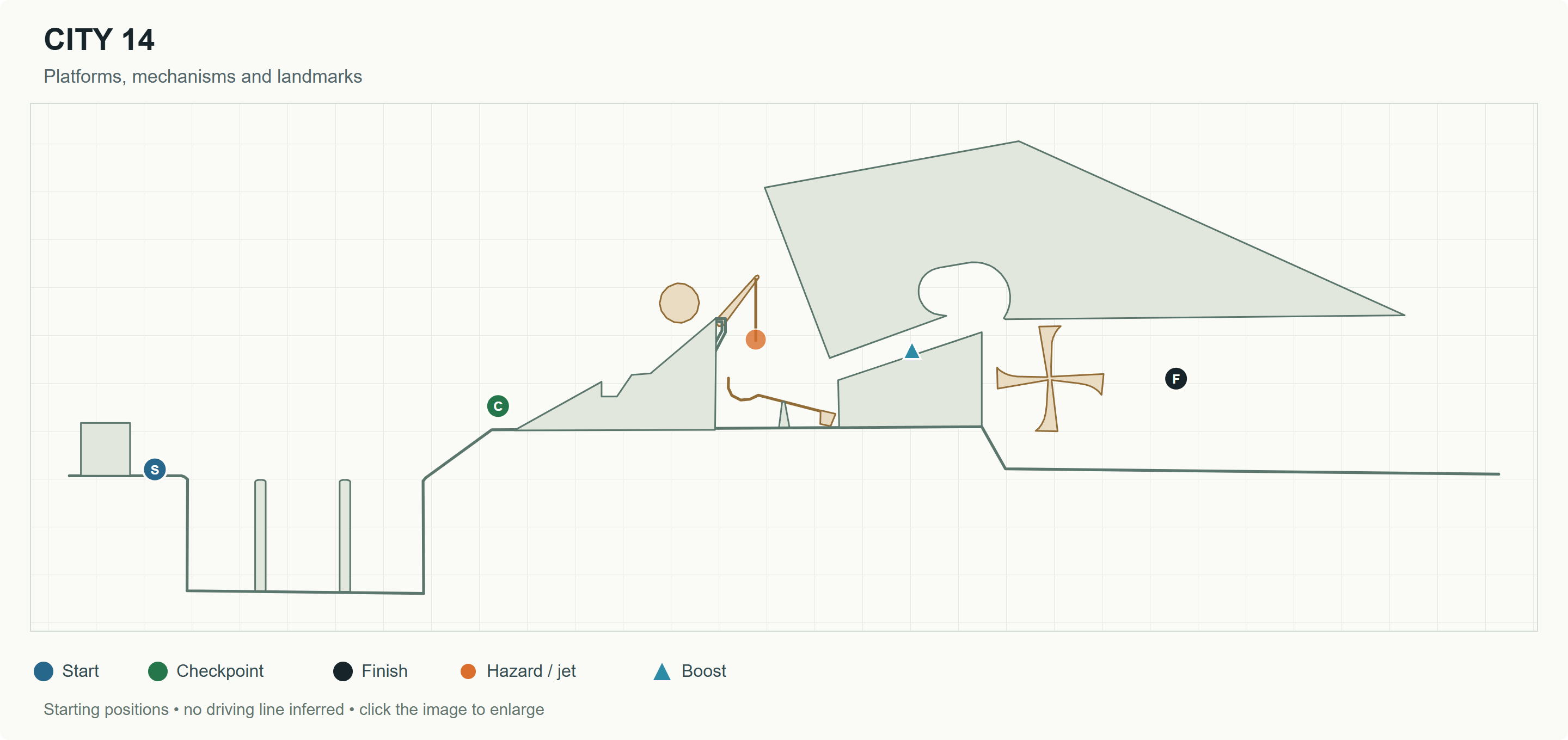
City 14 has only one checkpoint, so saving that position is an important part of learning the level. Its marker separates the long opening from the higher terrain and released objects ahead. Make a controlled pass before experimenting with a faster climb.
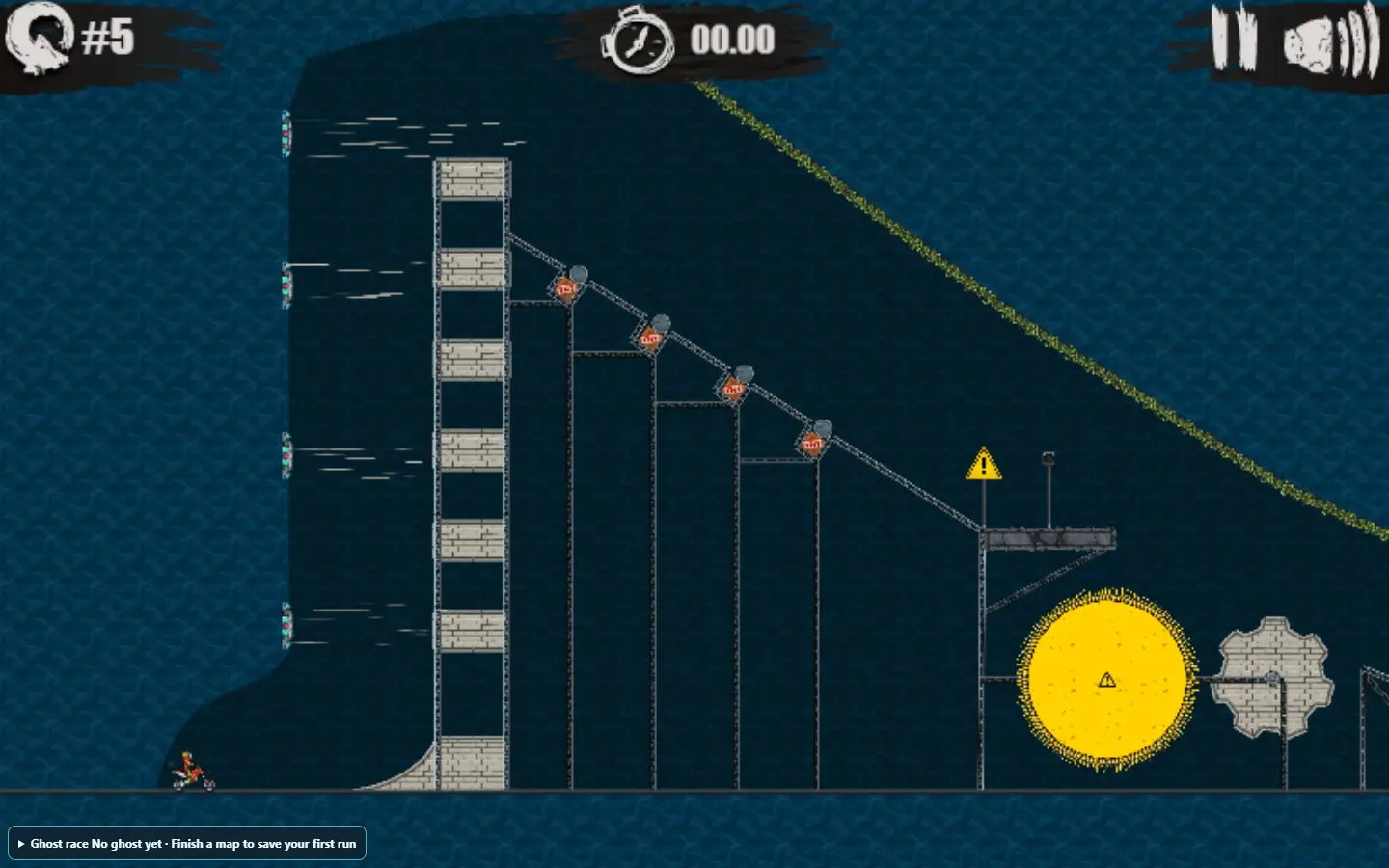
The level’s shape is easier to understand as a connected climb than as isolated obstacles. Study the layout to see how the road rises beyond the bridge and where the later boost sits. The overview is a location guide: it does not turn moving surfaces into a fixed route or guarantee that every visible ledge can be reached from your current speed.
 VIEW FULL SIZE +
Evidence: City 14 level data
Read the boulder’s movement before entering its line
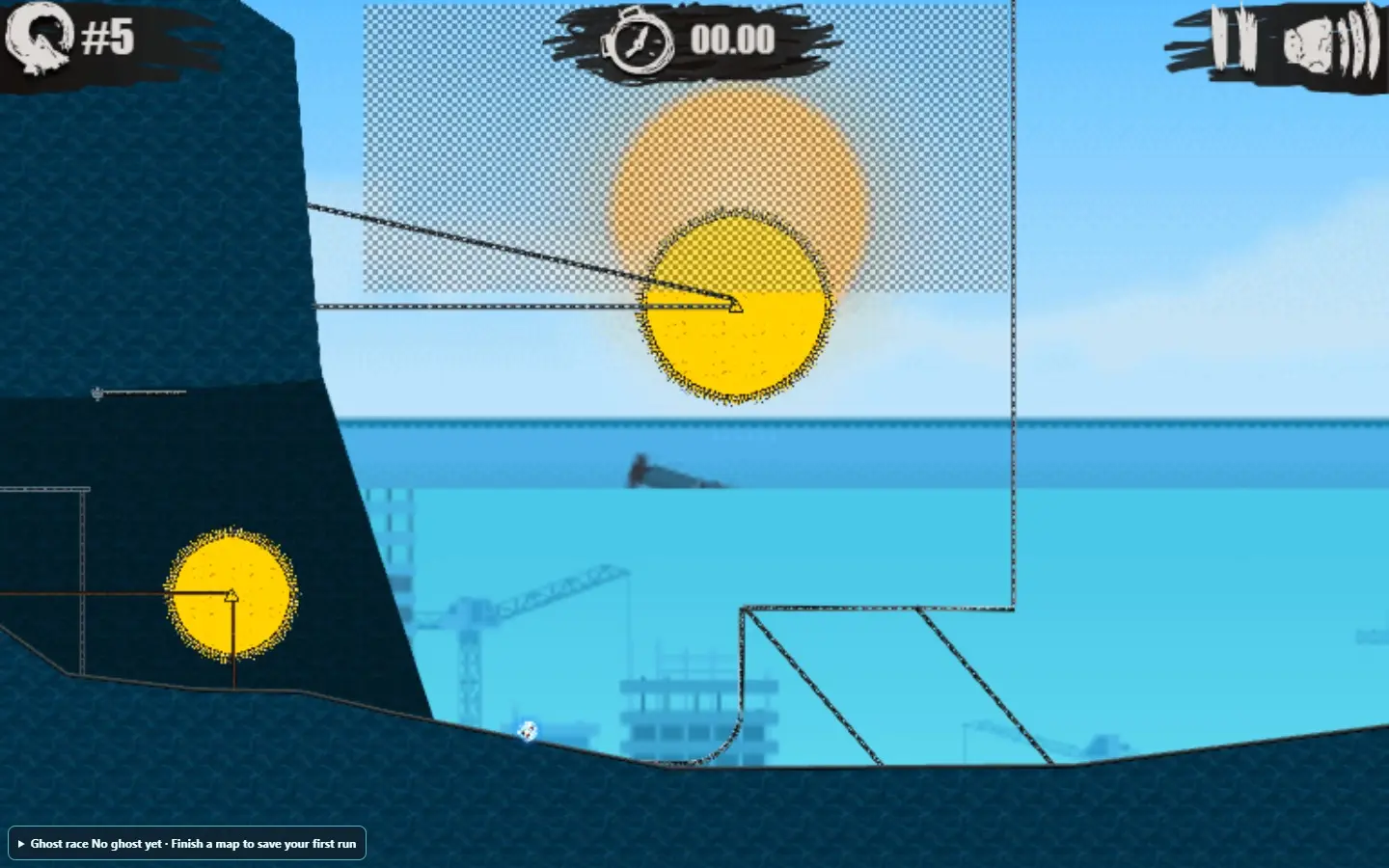
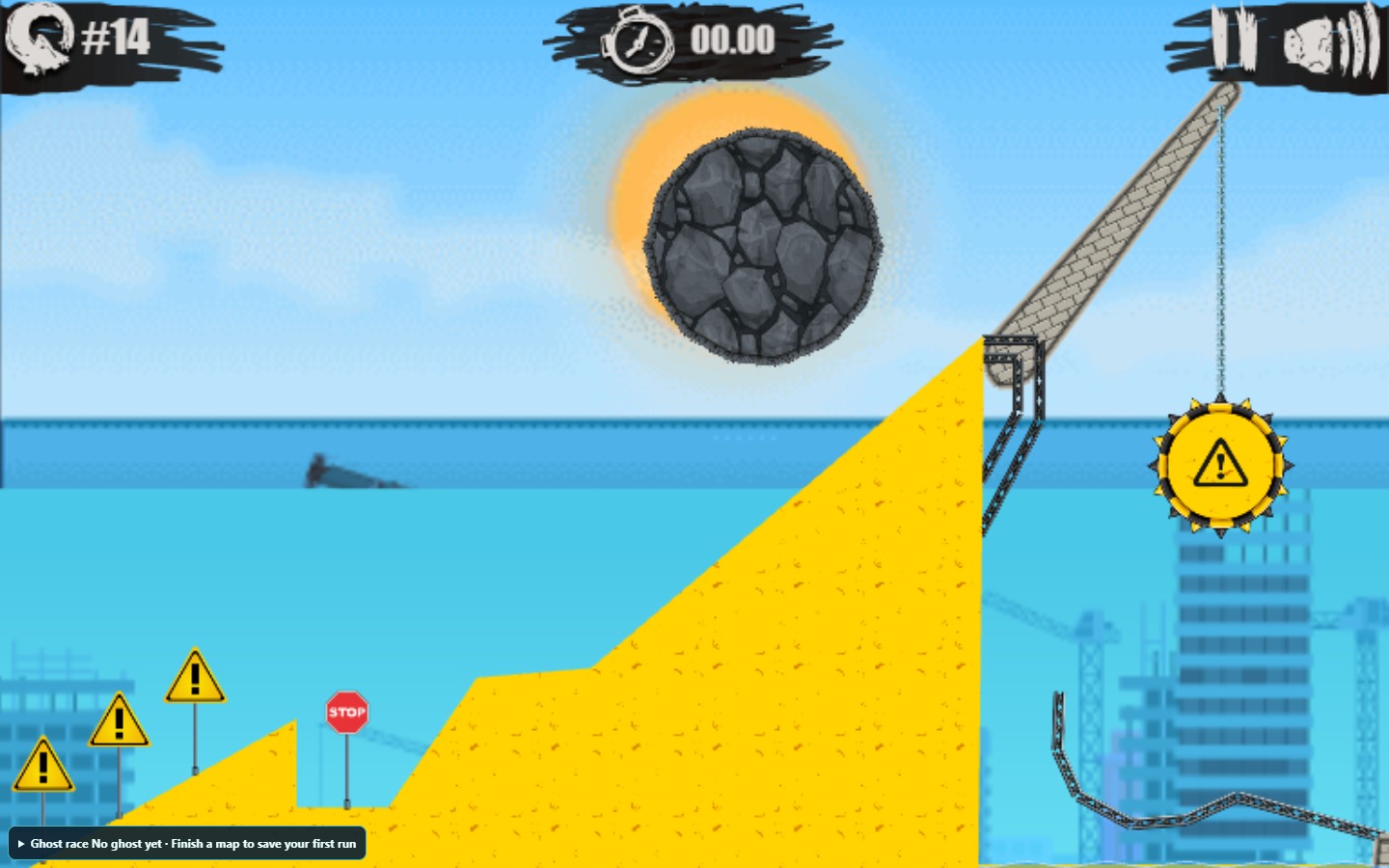
The large round boulder is released onto a slope, so the space around it changes after activation. Watch where it is moving relative to the road and the bike. A rock rolling downhill can reach a narrow approach much sooner than its starting position suggests.
Supported ground gives you the best place to make a timing decision. Slow before entering the boulder’s line, observe the available gap and then commit when the next surface is usable. Trying to recover after the bike is already trapped between the rock and the slope leaves fewer options.
A checkpoint retry should begin with observation rather than a copied delay. The mechanism can return to its starting state during a restart. Look at whether the rock is still held or already rolling, then choose the approach that fits that state. The screenshot shows the boulder before release so that its starting location and receiving slope are easy to recognise.
 VIEW FULL SIZE +
Evidence: City 14 level data · Level-detail screenshot record
Set the bike up before the later boost
The boost near the later climb is most useful when the bike is already aligned with the road. Collecting it while rotating into a wall wastes the extra thrust. Build a clean approach first, then keep the next receiving surface in view as speed increases.
A stable finish provides the reference for improving City 14’s time. Its result thresholds are 25 seconds for three stars, 30 for two and 36 for one. Try to reduce one hesitation or rough landing at a time; the long bridge and single checkpoint make an uncontrolled shortcut expensive when it fails.
Evidence: City 14 level data · Star result calculation
ABOUT THIS GUIDE
Sources & verification
The single checkpoint, star times, linked bridge and boulder positions were checked against the current map. The boulder image shows its held state before release.
What the gameplay evidence covers
The bridge and boulder were inspected with the detail camera. A full-course player completion was not recorded for this guide.
Layouts show initial geometry. Suggested riding approaches are not certified input sequences. No named human reviewer is currently credited.
- City 14 level data1 checkpoint; 3 / 2 / 1 star thresholds: 25 / 30 / 36 seconds.
- Star result calculationpostRace compares the game timer with every map prize threshold using an at-or-below comparison.
- Level-detail screenshot recordCapture methods, map IDs, image hashes and the isolated Alter 3 gate check.
- Map facts and diagram provenanceLayout source hashes and the coordinate method. Diagrams show initial geometry, not a played route.
First published · Updated
Latest revision: Added explicit sources, per-guide verification coverage, AI preparation disclosure and correction instructions. Clarified the distinction between screenshots, mechanism inspection and completed playthroughs.