 RIDE & RACE
Prepare for the transfer before entering the opening
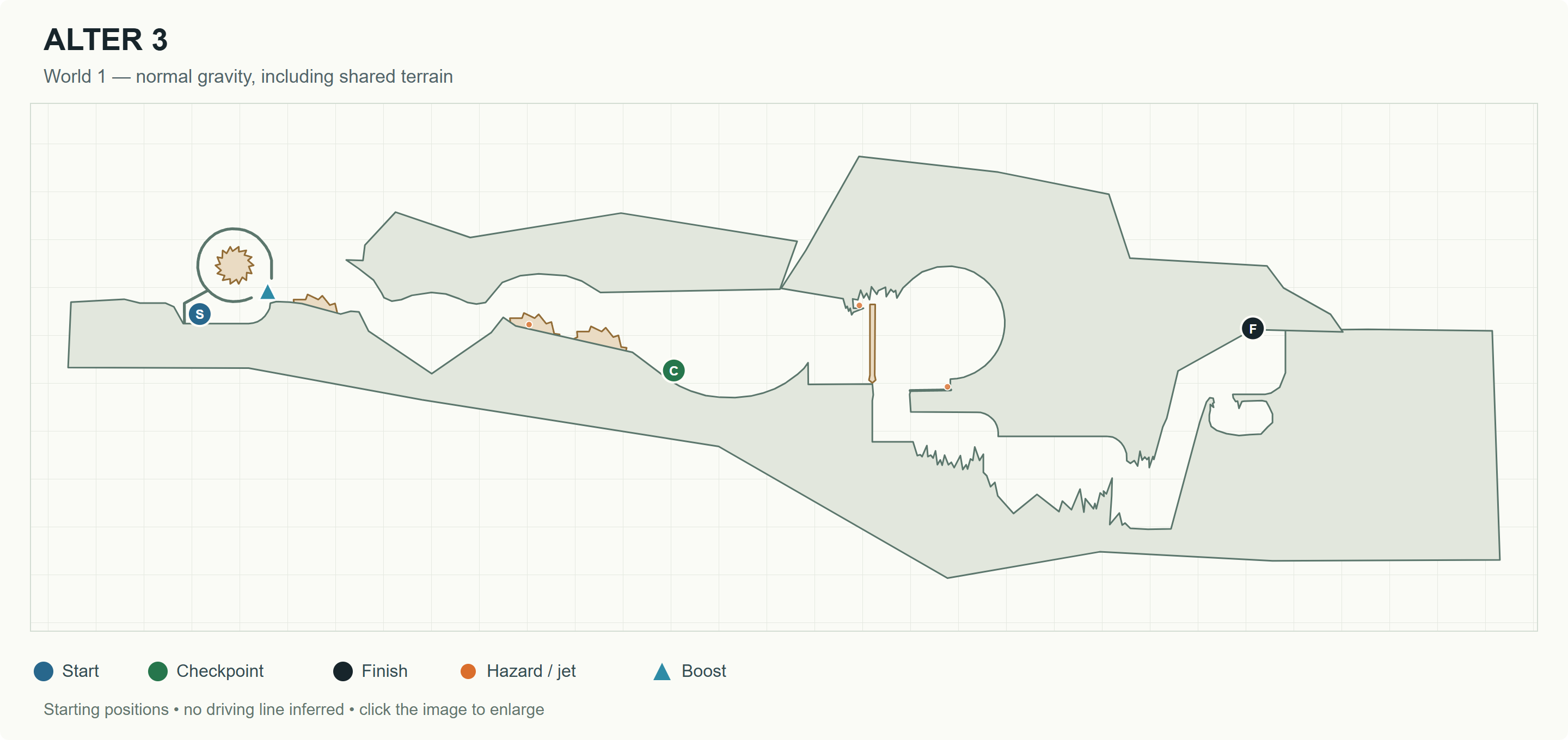
The approach combines changes of height with mechanisms that react to the run. Keep the bike controlled as you move toward the transition and notice where the next surface lies. The first checkpoint gives you a nearer place from which to learn the later section, but it does not remove the need to plan the landing.
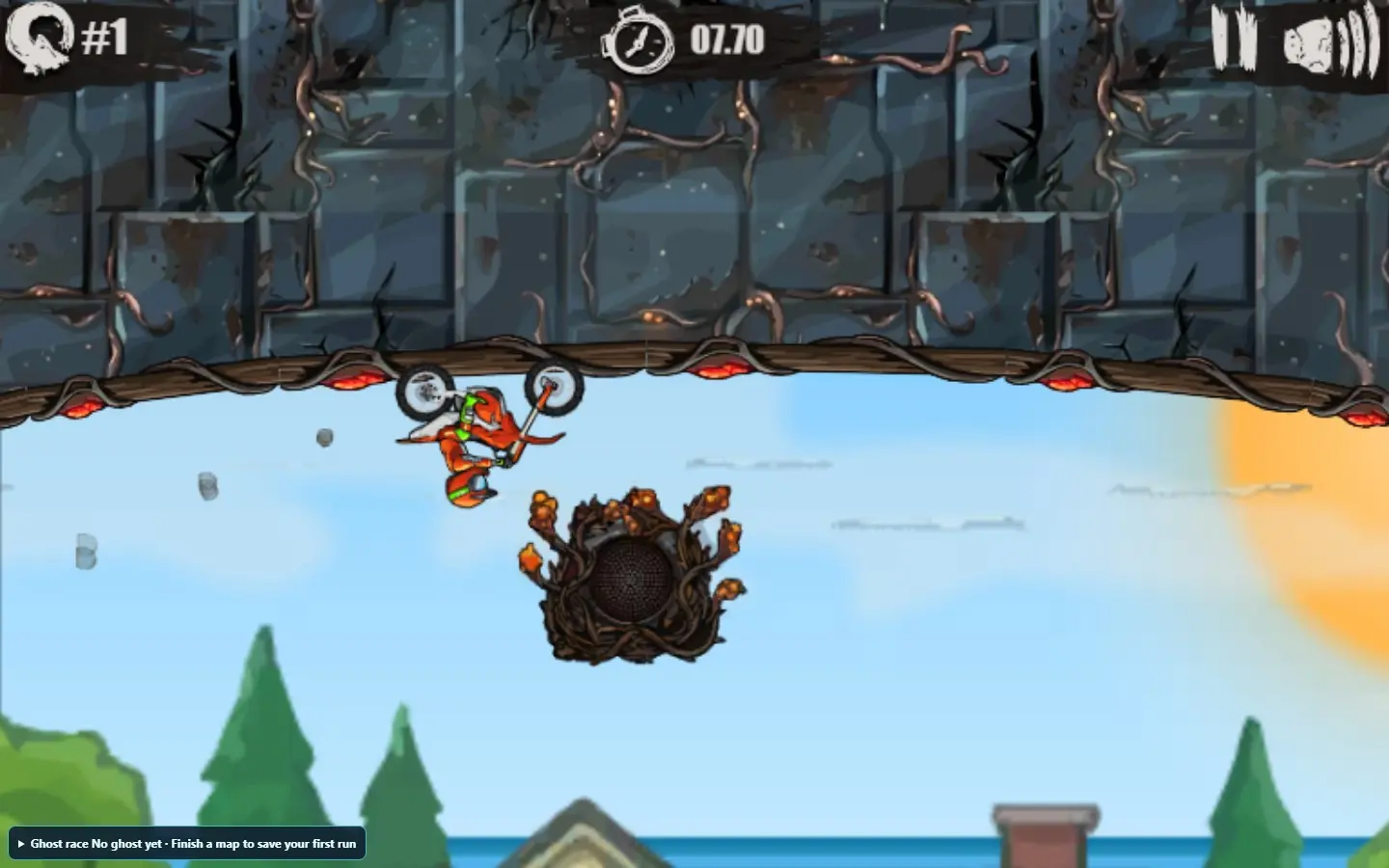
The world change is easier to manage when the bike enters with a deliberate angle. Avoid adding a large rotation simply because a jet or drop has changed vertical speed. Read the tyres’ relation to the receiving surface, then use the smallest correction that brings the bike toward it.
 VIEW FULL SIZE +
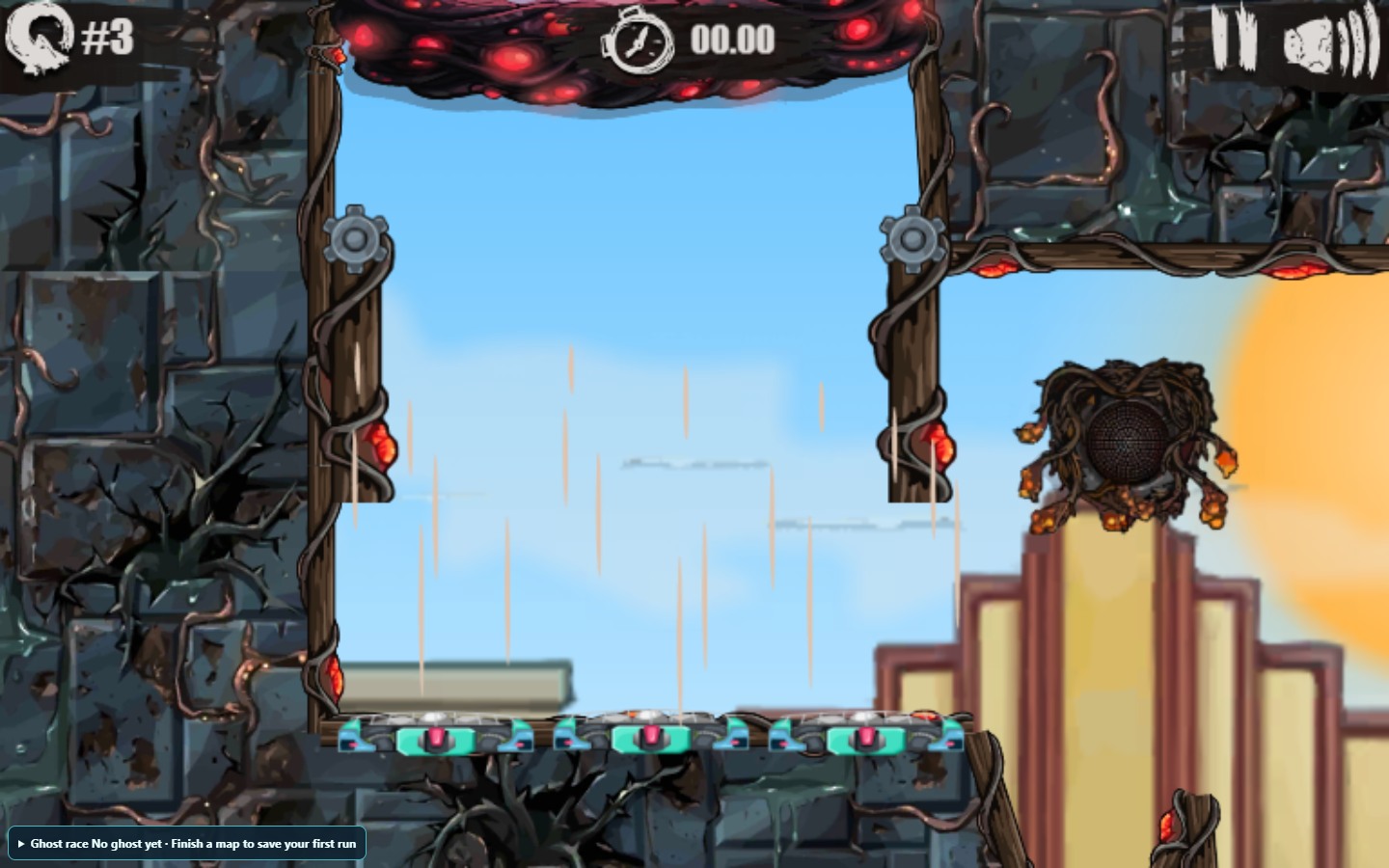
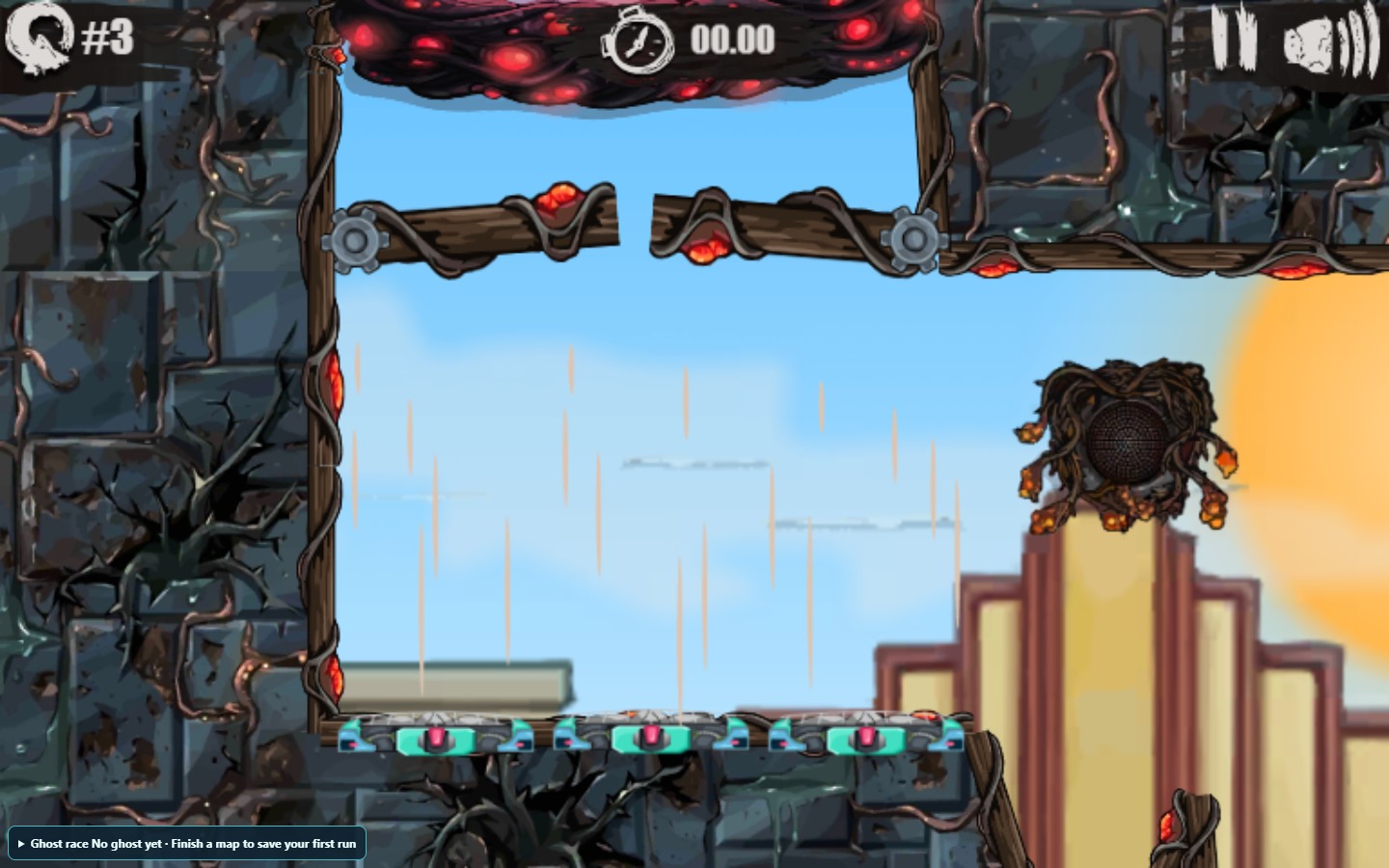
Recognise the two stages of the closing gate
The two bars start apart and close together after the second-world trigger is crossed. Before activation, the opening connects the transfer area; afterward, the bars form a barrier against a rebound. The mechanism changes the available space even though the bike may still be close to the transition.
The before-and-after views explain why turning back through the same opening is unreliable. Look for the receiving road and the next safe direction of travel instead. The closing bars belong to the course’s intended flow, so a sensible correction works with that flow rather than trying to reverse it.
 VIEW FULL SIZE +
 VIEW FULL SIZE +
Evidence: Alter 3 level data · Level-detail screenshot record
Treat the air jets as part of the landing problem
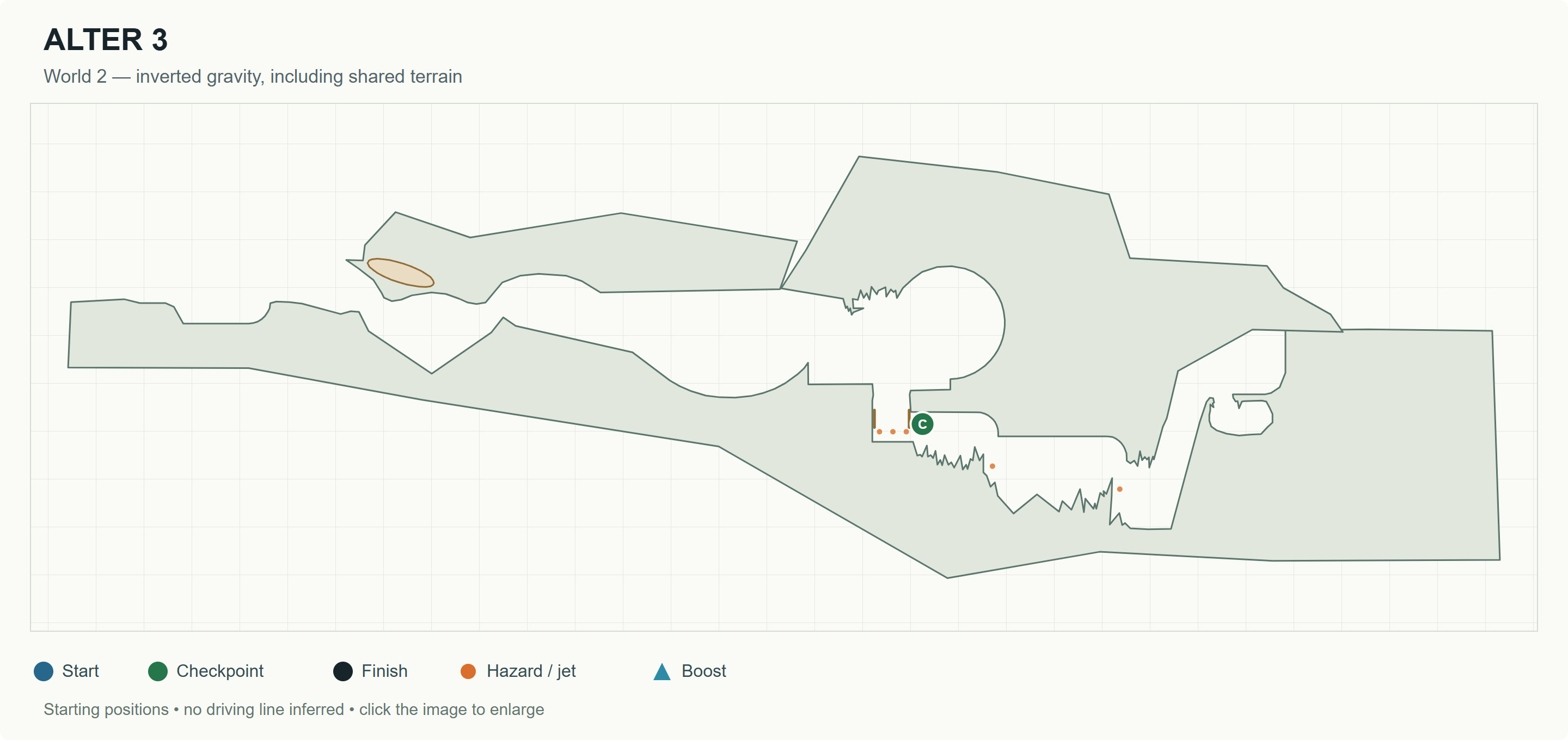
The second-world jets change the bike’s motion while gravity is already different from the opening world. Watch the resulting path of the whole bike, not just the direction its front wheel points. Holding a lean key does not cancel the force that a jet applies to the run.
A stable receiving contact is the next useful target after the gate. Aim to reach a supported section with the wheels ready for it, then rebuild speed for the following part. Repeated large corrections in the transfer area can turn a manageable rebound into a collision with the newly closed bars.
 VIEW FULL SIZE +
Evidence: Alter 3 level data
Use the second checkpoint to make the sequence repeatable
Alter 3 has a checkpoint in each part of its changing-world route, giving you two useful practice anchors. After a crash, read the active world and gate state before repeating your approach. A restored mechanism may be open again, so the scene in front of you is a better guide than the last frame you remember.
A successful practice attempt ends on the receiving road, not merely beyond the closing bars. Once you can reproduce that position, carry the same deliberate approach through the later jets and the return toward the finish. Improving one stable transfer at a time is easier to assess than changing every input together.
Evidence: Alter 3 level data · Alter world ownership and bike flipping
ABOUT THIS GUIDE
Sources & verification
The before-and-after gate images inspect the actual second-world mechanism. A temporary wheel sensor probe triggered the existing listener; 40 physics steps closed and locked both bars.
What the gameplay evidence covers
The gate inspection is an isolated mechanism check. It is not evidence of a player completing the transfer or the whole map.
Layouts show initial geometry. Suggested riding approaches are not certified input sequences. No named human reviewer is currently credited.
- Alter 3 level data2 checkpoints; 3 / 2 / 1 star thresholds: 30 / 39 / 47 seconds.
- Alter world ownership and bike flippingThe bridge assigns world ownership, copies shared static terrain into both spaces and applies the changed bike pose and controls.
- Level-detail screenshot recordCapture methods, map IDs, image hashes and the isolated Alter 3 gate check.
- Map facts and diagram provenanceLayout source hashes and the coordinate method. Diagrams show initial geometry, not a played route.
First published · Updated
Latest revision: Added explicit sources, per-guide verification coverage, AI preparation disclosure and correction instructions. Clarified the distinction between screenshots, mechanism inspection and completed playthroughs.